
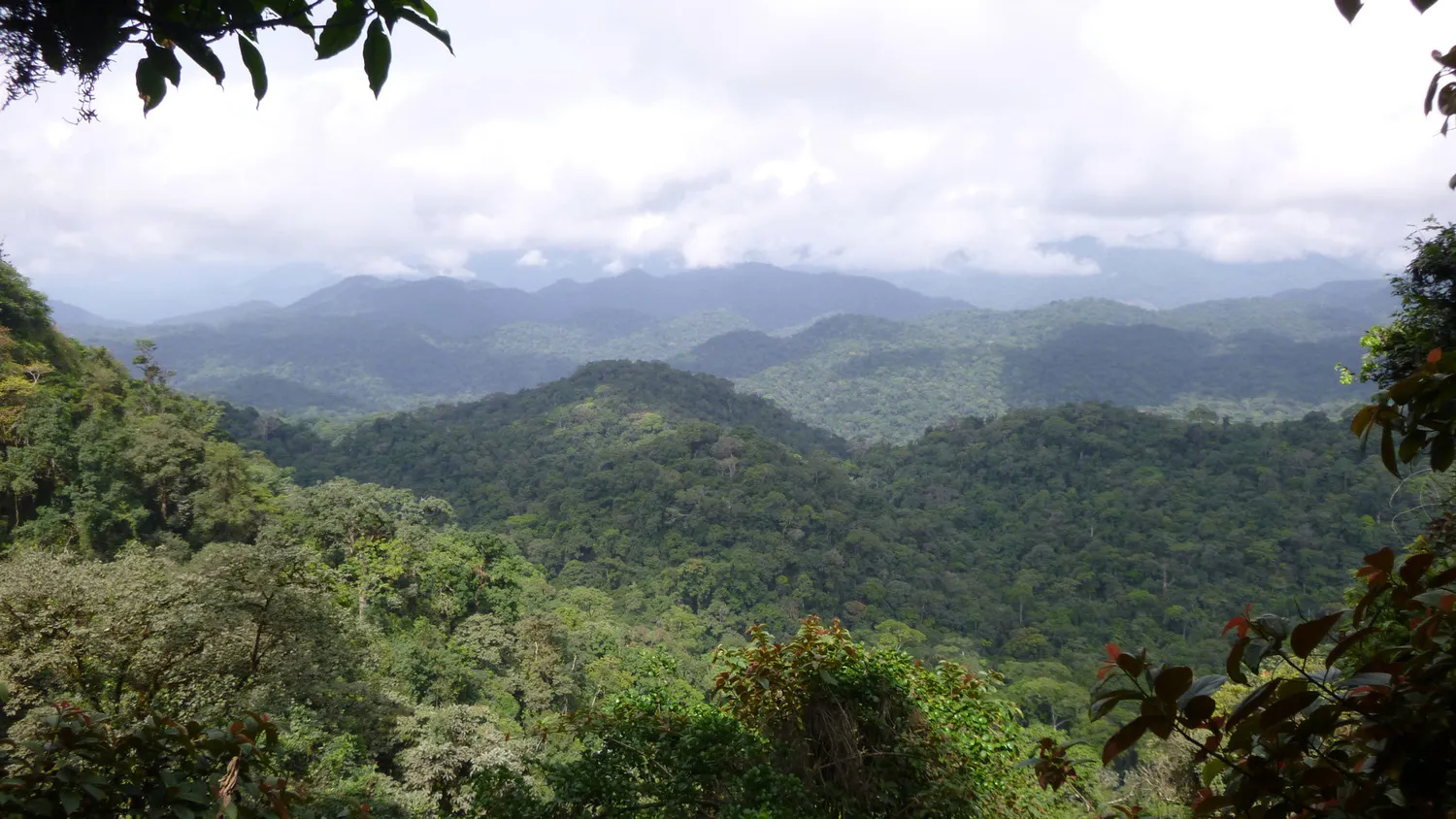
Greenpeace Renews Call for Stronger Protection.
Cameroon’s Ebo Forest is back at the centre of an environmental and political debate after Greenpeace Africa renewed calls for the government to give the forest permanent legal protection. A report published on 18 August 2026 argues that the future of one of Central Africa’s most important forest ecosystems remains uncertain and calls for stronger safeguards for its biodiversity and the communities whose livelihoods and cultural heritage are connected to the forest.
The latest intervention comes only days after Greenpeace Africa used the success of Cameroon’s Indomitable Lionesses at WAFCON 2026 to draw attention to Ebo Forest. In a statement dated 14 August, the organisation argued that just as the national women’s football team had seized a second chance on the continental stage, Ebo Forest deserved a similar opportunity to secure its future.
A Forest at the Centre of Cameroon’s Development Debate.
Ebo Forest, located in Cameroon’s Littoral Region, is one of the country’s most important remaining forest landscapes and is recognised for its exceptional biodiversity. It provides habitat for threatened species, including the Nigeria-Cameroon chimpanzee and forest elephants, while also supporting communities whose relationship with the forest extends beyond its economic value.
The debate surrounding Ebo is not new. In 2020, the Cameroonian government suspended plans to open large portions of the forest to logging after intense pressure from environmental organisations, scientists and local communities. The decision was widely welcomed at the time, but conservation groups have continued to argue that suspension alone does not provide sufficient long-term protection.
That unresolved question has now returned to the national conversation: whether Cameroon should move from temporary protection measures towards a permanent legal framework that clearly establishes the status of Ebo Forest.
Conservation Versus Economic Interests.
The controversy reflects a broader challenge facing Cameroon and other Congo Basin countries. Forests are valuable sources of timber and land for economic development, but they also provide critical environmental services, protect biodiversity and contribute to climate regulation.
Cameroon has significant economic pressures, including the need to generate employment, attract investment and expand productive industries. Logging and other land-use activities can therefore be presented as part of a broader development strategy. Conservationists, however, argue that the economic value of an intact forest cannot be measured solely by the timber that can be extracted from it.
For Ebo, the debate is particularly sensitive because local communities have repeatedly raised concerns about the impact of land-use decisions on ancestral territories and livelihoods. Greenpeace has called for community rights and participation to be incorporated into decisions concerning the forest.
The Banen Communities Remain Central to the Debate.
The future of Ebo is also inseparable from the Banen communities, whose ancestral connections to the forest have been an important part of the conservation debate. Environmental organisations have argued that protecting Ebo should not mean excluding local communities from decisions concerning their own traditional lands.
This presents Cameroon with a difficult policy question. Effective conservation cannot simply be imposed from above if it ignores the people who live around and depend upon forest ecosystems. At the same time, economic development decisions that fail to account for long-term environmental costs can create problems that become much more expensive to address later.
The challenge is therefore to establish a framework that protects biodiversity while recognising legitimate community interests and allowing sustainable economic activity where appropriate.
Ebo Has Become a Test of Cameroon’s Forest Policy.
The renewed attention comes as Cameroon faces increasing international scrutiny over the management of its forests. The country is part of the Congo Basin, one of the world’s most important tropical forest regions and a major carbon sink.



