Thousands Turn Out to Celebrate Historic Continental Triumph.
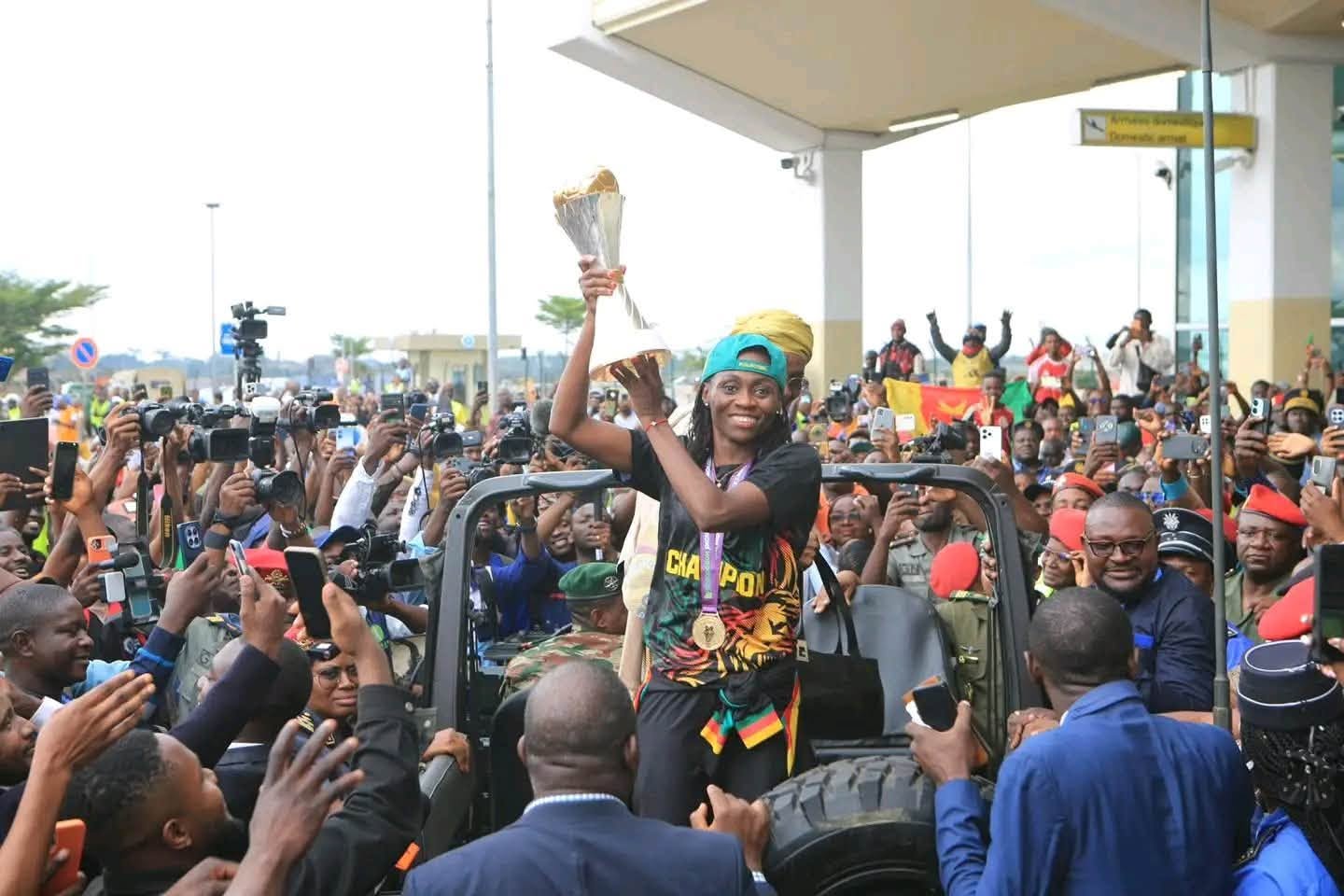
Cameroon’s Indomitable Lionesses have returned home to a jubilant reception in Yaoundé after securing the country’s first-ever Women’s Africa Cup of Nations (WAFCON) title. Thousands of supporters gathered along the streets of the capital on 17 August 2026 to celebrate the team following its historic 3–0 victory over Malawi in the final in Morocco. Reports on the homecoming were published on 18 August, making the development fresh for Aftown News.
The celebrations marked the culmination of a remarkable tournament for Cameroon, which entered the competition as one of Africa’s most experienced women’s football teams but had never previously won the continental championship. The victory has therefore taken on significance far beyond the sporting result, giving the country a rare moment of national celebration and providing another landmark achievement for women’s football in Cameroon.
Supporters dressed in the national colours lined the roads as the players and technical staff travelled through Yaoundé. The reception reflected the emotional significance of a team that had spent years competing at the highest level without managing to lift the WAFCON trophy.
A Final That Changed Cameroon’s Women’s Football History.
Cameroon defeated Malawi 3–0 in the final, producing a decisive performance that secured the country’s first WAFCON championship. The result ended years of near misses and established the Indomitable Lionesses as continental champions.
The triumph is particularly significant because Cameroon has historically been one of the leading forces in African women’s football. The Lionesses have regularly qualified for major continental competitions and have produced generations of internationally recognised players, yet the WAFCON title had remained beyond their reach.
That changed in Morocco.
The victory gives the current generation of players a place in Cameroonian football history and provides a new reference point for the development of women’s football in the country.
The Team’s Success Goes Beyond the Trophy.
The celebrations in Yaoundé also highlighted the wider cultural importance of football in Cameroon. The sport has long been one of the country’s strongest sources of national identity, with the men’s Indomitable Lions traditionally receiving the largest share of public attention.
The success of the women’s national team offers an opportunity to broaden that recognition.
Women’s football has grown considerably across Africa in recent years, with increasing investment from the Confederation of African Football, national federations, sponsors and broadcasters. The rise in prize money and growing international visibility have also created greater incentives for countries to invest in women’s competitions.
Cameroon’s WAFCON victory comes at a time when the women’s game is attracting unprecedented attention across the continent.
Players Become New Role Models for Young Girls.
One of the most important consequences of the victory could be its influence on young girls interested in football.
For many aspiring female footballers in Cameroon, the Indomitable Lionesses provide visible examples of what a professional career can look like. Their success demonstrates that women’s football can produce national heroes and compete successfully on the continent’s biggest stage.
The challenge will now be ensuring that the enthusiasm generated by the victory translates into sustained investment at grassroots level.
Cameroon has a deep football culture, but young female players still face barriers related to facilities, funding, coaching, competitions and career opportunities. A national title creates an opportunity to strengthen those areas rather than allowing the celebrations to disappear once the tournament ends.
The Next Challenge Is Building on the Victory.
Winning the WAFCON is an important achievement, but maintaining success will require institutional support.
The Cameroon Football Federation will face pressure to ensure that the national team’s preparation, player development and international competitiveness are maintained. The federation will also need to strengthen domestic women’s competitions so that future generations have a clear pathway from youth football to the senior national team.