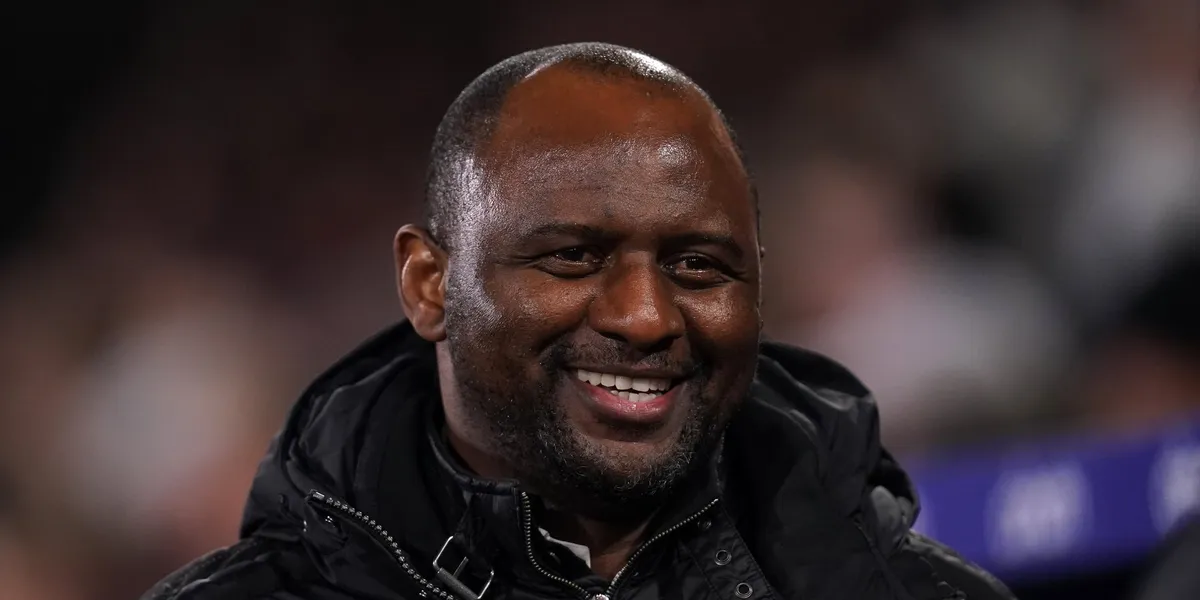
A New Era Begins After a Disappointing World Cup.
Senegal has turned to one of the most recognisable figures in modern African football to lead its national team into a new era. Patrick Vieira, the Dakar-born former France international and 1998 World Cup winner, was appointed Senegal’s head coach on 18 August 2026, replacing Pape Thiaw following the Teranga Lions’ disappointing campaign at the 2026 FIFA World Cup. The appointment was confirmed by the Senegalese Football Federation and subsequently reported by CAF, FIFA, Reuters and other major international outlets.
Vieira’s appointment is more than a high-profile coaching change. It represents an attempt by Senegal to reset after a period in which expectations surrounding the national team have become exceptionally high. The Teranga Lions have developed into one of Africa’s most formidable sides over the past decade, winning the 2021 Africa Cup of Nations and regularly competing at major international tournaments. Yet the 2026 World Cup exposed weaknesses that the federation now believes require a fresh approach.
Vieira arrives with the reputation, experience and playing pedigree to command immediate attention. But reputation alone will not be enough. His challenge is to transform a talented generation of Senegalese footballers into a team capable of delivering consistently when the pressure is greatest.
Senegal’s Golden Generation Needs a New Direction.
Senegal possesses an extraordinary collection of players, many of whom have competed at the highest level of European football. The squad has benefited from years of investment in youth development and the emergence of players capable of performing in the Premier League, Ligue 1, Serie A and other major competitions.
The problem is not a lack of talent. It is how that talent is organised and converted into results.
Senegal’s World Cup campaign demonstrated the difficulty. The Lions suffered defeats against France and Norway in the group stage before recovering with a 5–0 victory over Iraq to reach the knockout phase. Their campaign ultimately ended in a dramatic 3–2 defeat to Belgium in the Round of 32, despite Senegal leading 2–0 late in the match.
For a team with Senegal’s ambitions, that kind of collapse inevitably raises questions about tactical management, mentality and the ability to control decisive moments. Vieira now inherits those questions.
Vieira Brings a World Champion’s Pedigree.
Few African coaches can match Vieira’s playing credentials.
Born in Dakar, Vieira moved to France as a child and eventually became one of the defining midfielders of his generation. He won the 1998 FIFA World Cup and Euro 2000 with France, earned 107 international caps and became an iconic figure at Arsenal, where he won three Premier League titles.
His club career also included spells with Juventus, Inter Milan and Manchester City. After retiring as a player, he moved into coaching, beginning with New York City FC before managing Nice, Crystal Palace, Strasbourg and Genoa. That experience across different football cultures could prove valuable in Senegal.
But international management is fundamentally different from club football. Vieira will have limited time with his players, meaning his ability to communicate ideas quickly and build a coherent tactical identity will be crucial.
His Biggest Advantage Could Be Understanding the Modern Player.
Vieira’s experience at elite European clubs gives him an understanding of the demands facing many Senegalese players abroad.
He knows the pressure of playing for major clubs. He understands dressing-room dynamics and the expectations surrounding international stars. Most importantly, he has experienced international football at its highest level.
That could help him establish credibility with a Senegal squad containing players who already have significant reputations of their own.
At the same time, Vieira will need to ensure that the national team does not become overly dependent on individual stars. Senegal’s greatest strength has historically been its collective organisation, physical intensity and defensive discipline.
The new coach must preserve those characteristics while adding greater attacking flexibility and control.
The 2027 AFCON Qualifiers Provide His First Test.
Vieira’s appointment comes with little time for experimentation. Senegal’s next major objective is qualification for the 2027 Africa Cup of Nations, with qualifiers beginning in September. Reuters reports that Vieira’s first matches in charge will come during the next international window.
The timing gives him an immediate opportunity to establish his philosophy.
The AFCON remains particularly important for Senegal because the country has built a reputation as one of Africa’s leading football powers. The 2021 triumph ended decades of frustration and established a winning culture around the national team.
Vieira will be expected to maintain that culture while developing a squad capable of competing for another continental championship.
The 2025 AFCON Controversy Still Hangs Over Senegal.
Vieira also inherits a national team dealing with the aftermath of the controversial 2025 Africa Cup of Nations final.