African champions leave Berlin without a victory.
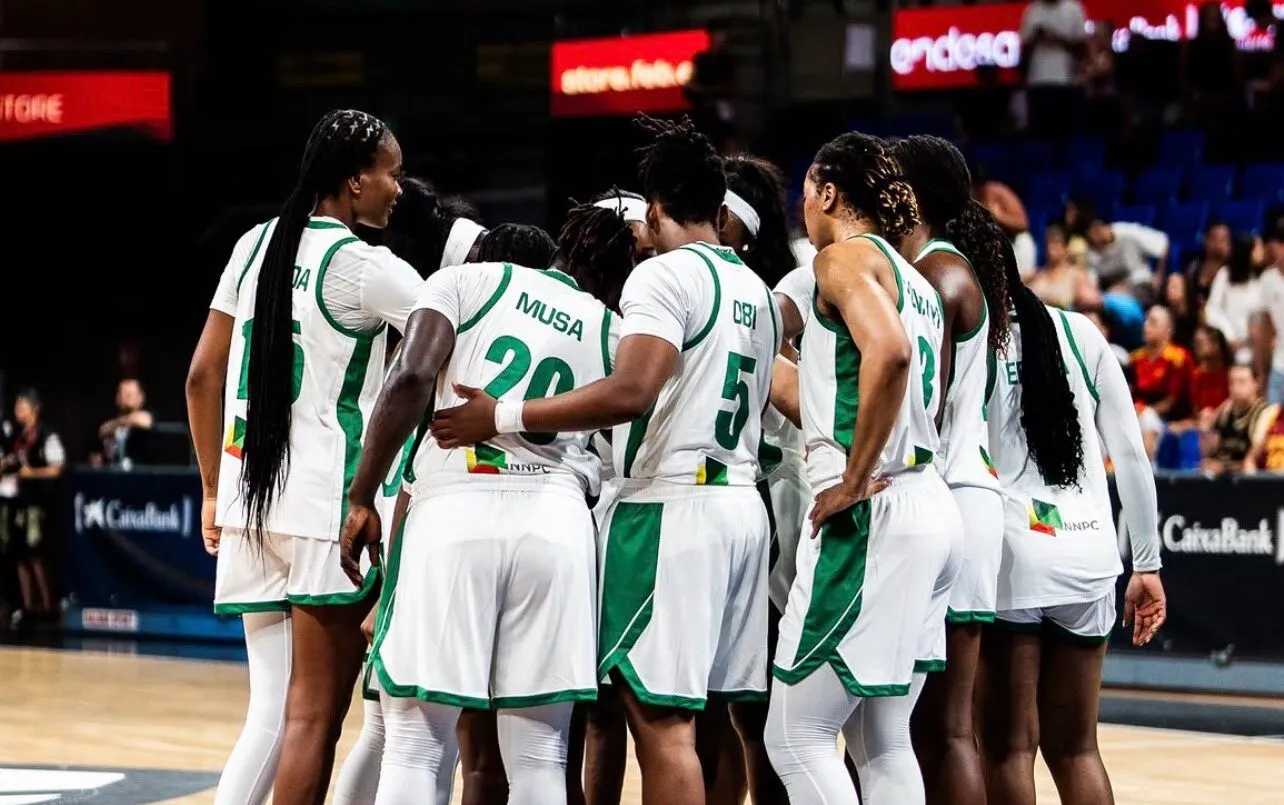
Nigeria’s D’Tigress have returned from the 2026 FIBA Women’s Basketball World Cup with difficult questions to answer after a winless campaign that ended with a heavy 111–56 defeat to France in Berlin.
The result completed three defeats from three Group B matches for the reigning African champions. Nigeria had previously lost 99–81 to South Korea and suffered a narrower 71–67 defeat against Hungary, leaving them at the bottom of their group and outside the knockout stages.
The scale of the defeat to France has intensified the scrutiny. France raced into a 31–13 lead after the opening quarter and extended the advantage to 65–26 by halftime. Nigeria struggled to generate consistent offence while France continued to increase the pressure, eventually winning by 55 points.
Oyedeji warns Nigeria can no longer rely on continental dominance.
Former D’Tigers captain and Nigeria Basketball Federation board member Olumide Oyedeji has described the campaign as a major warning for Nigerian basketball.
Oyedeji argued that Nigeria must urgently examine the structures supporting the women’s national team rather than treating the World Cup performance as an isolated disappointment. He warned that the rest of Africa is improving and that Nigeria can no longer assume that its position at the top of the continent is guaranteed.
His intervention comes at a particularly important moment because D’Tigress have enjoyed remarkable success in recent years.
The team won a fifth consecutive AfroBasket title in 2025 and reached the quarter-finals at the Paris 2024 Olympic Games, becoming the first African team to reach that stage of the women’s Olympic basketball tournament. The contrast between those achievements and the events in Berlin has made the World Cup collapse particularly difficult to explain.
The France defeat exposed a widening gap.
The final score against France was not simply another loss. It exposed the difference between Nigeria and one of the world’s strongest basketball programmes.
France scored 31 points in the opening quarter, followed by 34 in the second and another 30 in the third. Nigeria managed only 13 points in each of the first three periods before producing a stronger fourth quarter. France also made 22 three-point shots, demonstrating the shooting depth and offensive efficiency that Nigeria struggled to match.
Grace Efosa-Aguebor led Nigeria with 15 points, while France were led by Gabby Williams with 25. The individual performances, however, could not compensate for the collective problems exposed throughout the tournament.
Preparation and consistency will come under scrutiny.
Nigeria’s difficult tournament has inevitably raised questions about preparation, coaching continuity and the development of the national programme.
D’Tigress entered the World Cup with significant international experience, but the team struggled to maintain competitiveness against opponents capable of punishing defensive mistakes and slow starts.
The pattern appeared in more than one match. Against South Korea, Nigeria remained within reach for significant portions of the contest before the Koreans pulled away in the final quarter. Against Hungary, Nigeria again found itself chasing the game after falling behind early.
By the time France arrived, Nigeria had little margin for error.
The campaign therefore raises a broader question: how can Nigeria convert its strong African record into consistent competitiveness against the world’s leading basketball nations?
Africa is becoming more competitive.
Oyedeji’s warning about the rest of Africa catching up is significant.