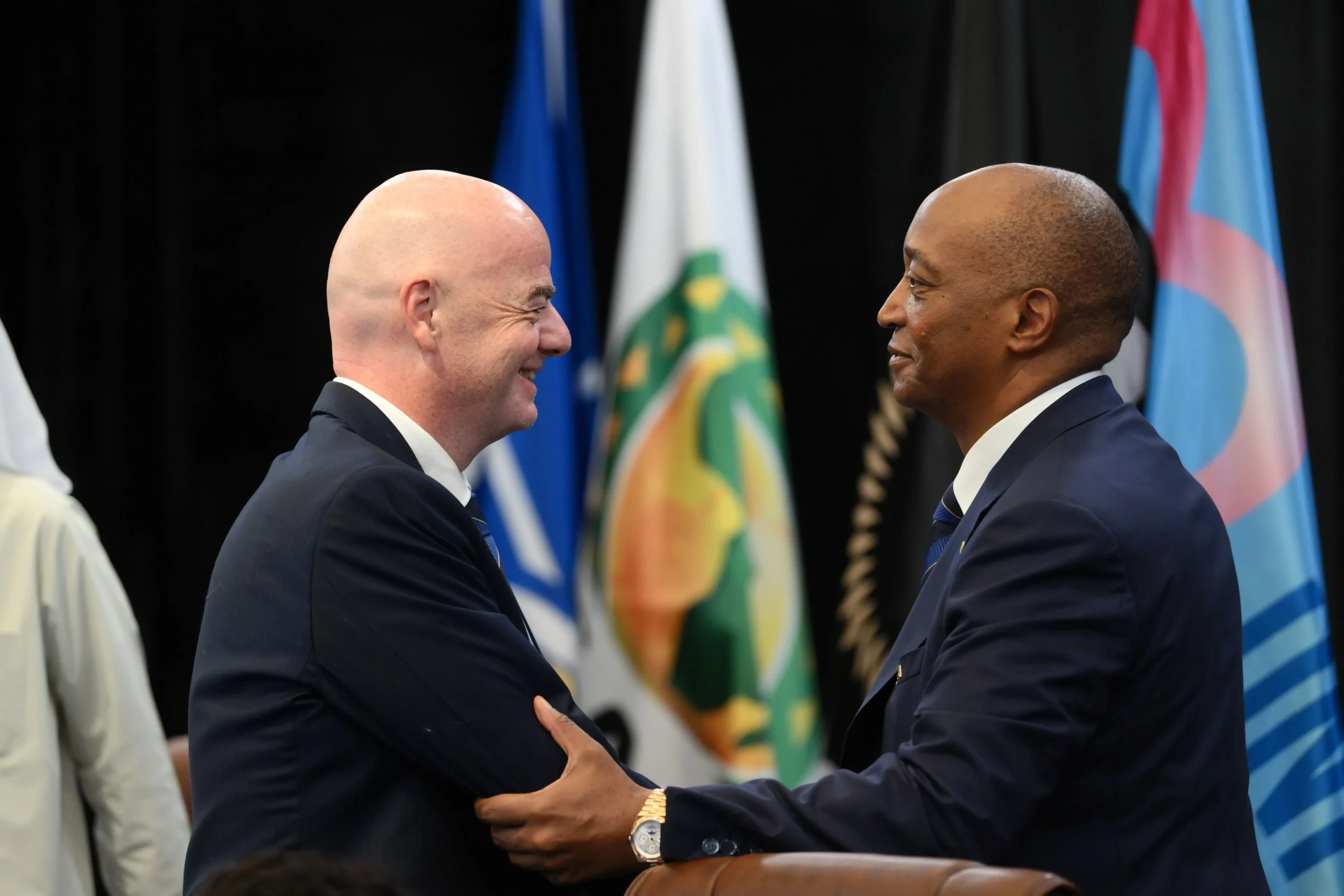
Governing bodies intervene in Nigeria’s football crisis.
FIFA and the Confederation of African Football have ordered the Nigeria Football Federation to suspend its ongoing electoral process, putting the country’s planned September 27 elective congress on hold as the two governing bodies begin an assessment of the crisis affecting Nigerian football administration.
The decision represents a significant intervention in the affairs of one of Africa’s most influential football nations. Rather than allowing the electoral process to continue while questions remain over the federation’s leadership and governance structures, FIFA and CAF are seeking to establish what has happened and determine an appropriate way forward.
The planned elective congress was scheduled to take place in Lafia, Nasarawa State, on September 27. That timetable has now been suspended.
Resignations triggered the latest crisis.
The intervention follows a period of considerable instability within the NFF. FIFA said it and CAF were reviewing recent developments, including the reported resignations of NFF President Ibrahim Gusau, members of the Executive Committee and General Secretary Mohammed Sanusi.
Gusau had previously confirmed his resignation, saying the decision was taken after consultations and in what he considered the overriding interest of Nigerian football. His departure, together with changes involving other senior officials, created uncertainty over the leadership of the federation and the legitimacy and direction of the electoral process.
The situation has also been complicated by disagreements over how Nigerian football should be reorganised and how the next leadership should emerge.
FIFA and CAF want a broader assessment.
According to reports, FIFA and CAF are not simply postponing the election. The organisations are undertaking a joint assessment covering the legal, governance, administrative and electoral implications of the developments inside the NFF.
A joint mission is expected to travel to Nigeria as part of the process. The objective will be to engage relevant stakeholders and examine the circumstances surrounding the leadership changes before decisions are made about the next stage of the electoral process.
That could mean significant changes to the timetable and potentially to the framework under which the next NFF leadership is selected.
Nigeria’s football future hangs in the balance.
The crisis comes at a sensitive moment for Nigerian football. The Super Eagles remain one of Africa’s most prominent national teams, while the country has an enormous football economy built around professional clubs, academies, grassroots football and one of the continent’s largest pools of players.
For that reason, instability at the federation level extends beyond the boardroom.
The NFF is responsible for coordinating Nigeria’s national teams and administering a wide range of competitions and development programmes. Prolonged uncertainty over its leadership could therefore affect planning, funding and the implementation of football development programmes.