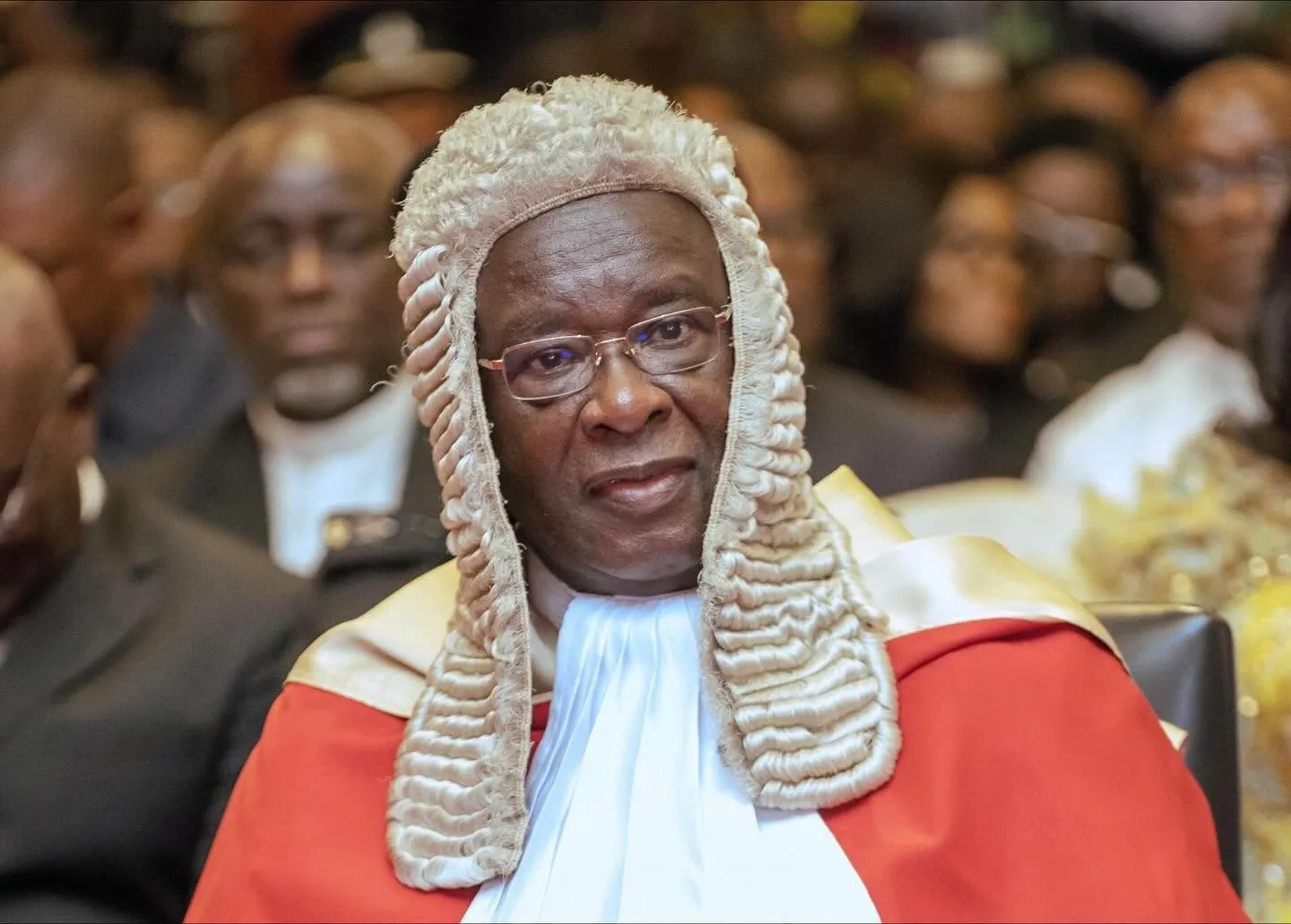
Ghana’s Chief Justice, Paul Baffoe-Bonnie, is facing growing political and public scrutiny after comments he made during visits to state institutions triggered accusations of political bias and renewed debate over the independence of the judiciary.
The controversy intensified on Monday, September 7, after the Ghana Catholic Bishops’ Conference rejected calls for the Chief Justice to resign, describing the demand as disproportionate to the remarks that sparked the dispute. The intervention has added another dimension to an increasingly heated political debate in Ghana.
Remarks at State Institutions Trigger Political Debate.
The controversy stems from comments made by Baffoe-Bonnie during working visits to the Social Security and National Insurance Trust and the Minerals Income Investment Fund on September 2.
During the engagements, the Chief Justice commended what he described as an improvement in the performance of the Minerals Income Investment Fund and questioned what had been achieved during the previous eight years.
While supporters interpreted the remarks as an assessment of institutional performance, critics argued that the reference to the previous eight years could be understood as a political comparison between Ghana’s current administration and the previous government.
That distinction has become central to the controversy because the Chief Justice occupies a position that requires public confidence in the political neutrality of the judiciary.
Opposition NPP Demands His Resignation.
Ghana’s main opposition New Patriotic Party has accused Baffoe-Bonnie of compromising the perceived neutrality of his office and called for his resignation.
The NPP argued that his comments created the impression that the Chief Justice was favourably comparing the performance of the current National Democratic Congress administration with that of the previous NPP government.
The demand has transformed what initially appeared to be comments made during institutional visits into a wider political argument about the boundaries of judicial conduct and the responsibilities of Ghana’s highest-ranking judicial officer.
The criticism has also extended beyond the opposition party. Former Minister of State for Tertiary Education Professor Kwesi Yankah said on Monday that the Chief Justice’s comments went too far, arguing that they could damage public perceptions of judicial neutrality.
Catholic Bishops Reject Calls for Ouster.
The Ghana Catholic Bishops’ Conference has taken a more cautious position.
In a statement issued over the weekend and reported Monday, the Bishops acknowledged that the Chief Justice could have commended improvements at state institutions without making political comparisons. However, they said the available evidence did not establish that Baffoe-Bonnie was partisan or that the judiciary had been compromised.
The Conference therefore described calls for his resignation over the remarks alone as excessive.
Its position is significant because it attempts to separate criticism of the Chief Justice’s choice of language from a conclusion that the judiciary itself has lost its independence.



