
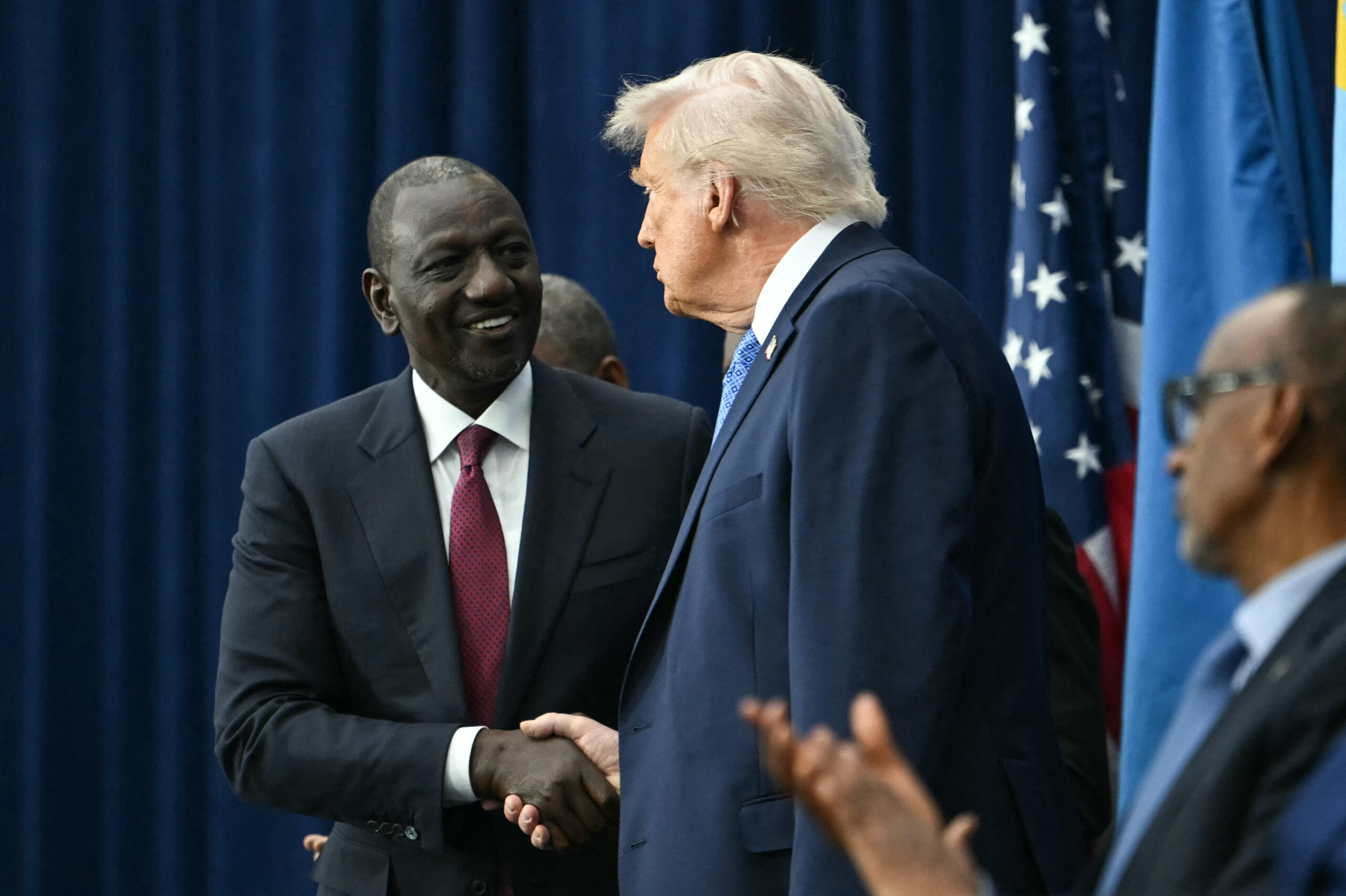
Kenya is moving closer to the centre of the global race for critical minerals after the United States pledged to help the country develop a local processing industry around its strategic mineral resources. The partnership is being driven by growing demand for rare earth elements and niobium, as well as Washington’s effort to build supply chains that reduce dependence on China.
At the heart of the emerging relationship is Mrima Hill in Kenya’s coastal Kwale County, a mineral deposit believed to contain rare earth elements and niobium worth tens of billions of dollars. The United States says it is prepared to support Kenya with investment, technology, skills development and industrial capacity so that more of the value generated from the minerals remains inside the country.
Mrima Hill Becomes a Strategic Asset.
Mrima Hill has attracted international attention because of its potentially significant deposits of rare earth minerals and niobium. Rare earth elements are increasingly important to modern industries, including electronics, electric vehicles, renewable energy and advanced manufacturing, while niobium is widely used to strengthen steel and has applications in aerospace and other high-performance industries.
The scale of the resource has turned what was once largely a domestic mining opportunity into a strategic economic issue. Kenya is currently considering bids from six companies for the development of the deposit, including two U.S.-based consortia, according to Kenya’s principal secretary for mining. U.S. company Critical Metals Corp and Australia’s RareX have previously said they were shortlisted for the competition.
The Kenyan government has not publicly released the full shortlist, meaning the final developer has not yet been selected. That makes the American commitment particularly significant because Washington is effectively signalling its willingness to participate in the wider industrial ecosystem that could emerge around the project rather than simply seeking access to the minerals themselves.
Washington Wants More Than Raw Mineral Exports.
U.S. Assistant Secretary of State for Africa Frank Garcia said Washington wants to support a mining sector that is transparent, respects communities and contributes to secure global supply chains. He also emphasised investment in processing and industries that can be developed around Kenya’s mineral resources.
That approach aligns with President William Ruto’s increasingly strong emphasis on local value addition. Rather than allowing Kenya to become another exporter of unprocessed minerals, the government wants processing, manufacturing and other economic activities to take place domestically.
Ruto has said that Kenya is accelerating the responsible exploration and development of rare earth elements, titanium, graphite, lithium, niobium and other strategic resources. He has also presented local processing as a pathway to create jobs and strengthen Kenya’s industrial capacity.
For Kenya, that distinction could determine how much economic benefit the country ultimately receives from its mineral wealth.
The China Factor Is Impossible to Ignore.
The growing U.S.–Kenya minerals relationship is unfolding against a much larger geopolitical competition. China currently dominates many parts of the global critical-minerals supply chain, particularly the processing of rare earth elements, and has tightened export controls on some strategic materials.
Washington is therefore looking to establish alternative sources and supply chains, including through partnerships with African countries that possess significant but underdeveloped mineral resources. The U.S. International Development Finance Corporation is already supporting a pipeline of African rare-earth projects as Washington attempts to diversify supplies.
Kenya consequently finds itself in a stronger negotiating position. Instead of viewing its minerals purely as commodities to be exported, Nairobi can use growing international competition to demand investment in infrastructure, processing facilities, technology transfer, training and jobs.



