
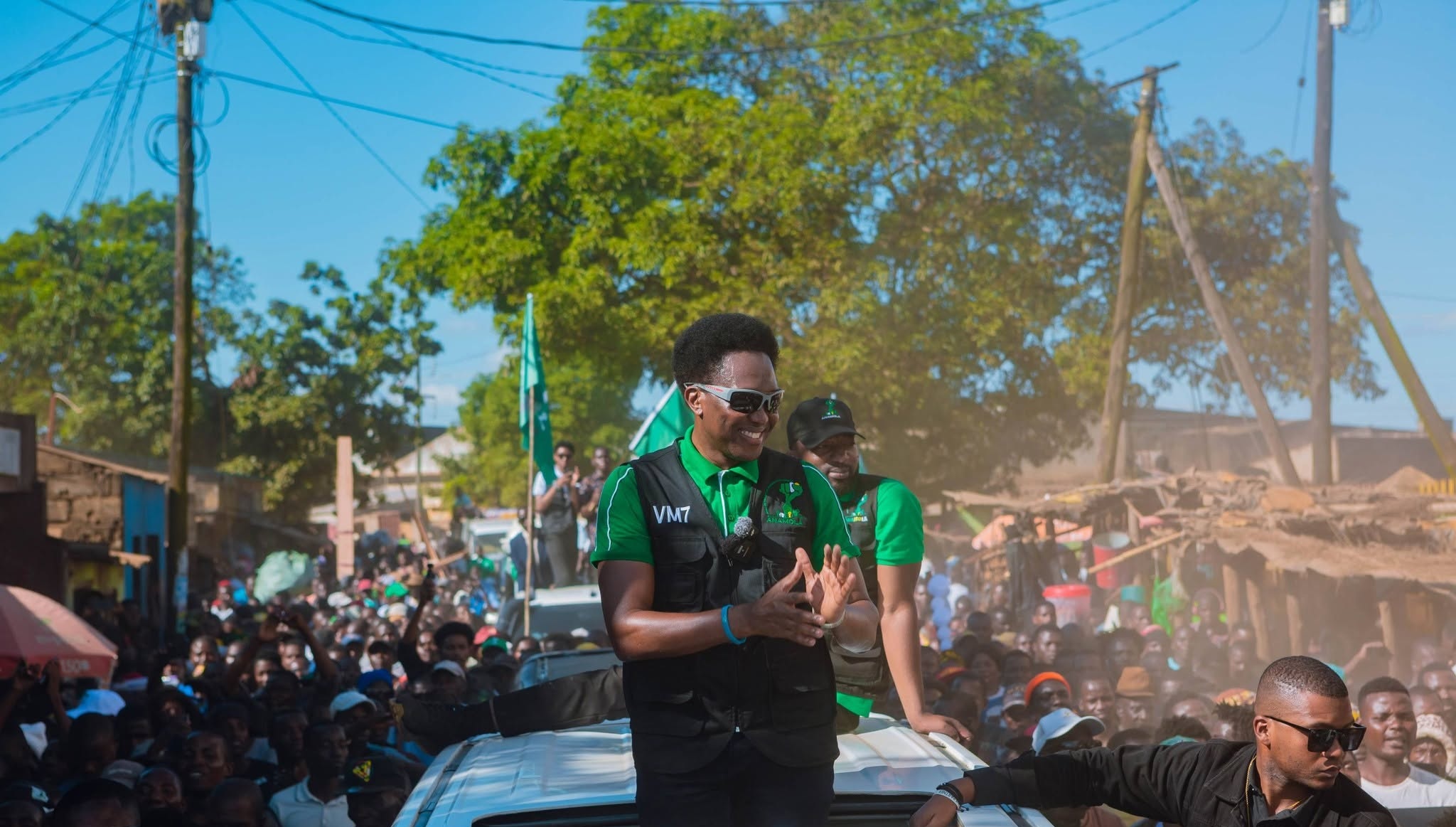
Mozambican opposition politician Venâncio Mondlane is preparing to face trial before the country’s Supreme Court over his alleged role in protests that followed the disputed 2024 presidential election, placing one of the country’s most prominent opposition figures at the centre of a major legal and political confrontation.
Mondlane was notified by the Supreme Court on August 25, 2026, that he would stand trial on five criminal charges connected to the post-election unrest. He is not under arrest and has not yet appeared before the court for trial. As of September 8, the Supreme Court has not announced a specific trial date, although Mondlane has said he expects proceedings to begin within two or three months.
Five Charges Are at the Centre of the Case.
The prosecution accuses Mondlane of five offences: public advocacy of crime, incitement to collective disobedience, public instigation to commit a crime, instigation to terrorism and incitement to terrorism.
According to reporting based on the prosecution’s case, authorities allege that Mondlane encouraged resistance and demonstrations through public statements and social-media broadcasts during the unrest that followed the election. The prosecution has also linked his calls for a political “revolution” to the disorder and violence that occurred during the protests.
Mondlane denies the allegations. He has maintained that his mobilisation was connected to his challenge to the official election result and has rejected accusations that he was responsible for the violence attributed to the protests.
It is important to distinguish those allegations from established facts: Mondlane has not been convicted, and the Supreme Court has not yet ruled on the charges.
The Case Comes From Mozambique’s Disputed 2024 Election.
The legal proceedings are rooted in Mozambique’s October 9, 2024 presidential election.
Mondlane ran as an independent candidate backed by the Podemos party and finished second behind Daniel Chapo of the ruling Mozambique Liberation Front, known as Frelimo. Mozambique’s Constitutional Council ultimately confirmed Chapo as the winner with 65.17 percent of the vote, while Mondlane received 24.19 percent.
Mondlane rejected the official result and claimed that he had actually won the election.
The dispute triggered months of demonstrations across Mozambique. More than 300 people were killed during the post-election unrest, according to Reuters figures cited by Al Jazeera. The violence transformed what began as an electoral dispute into a much broader political and security crisis.
Prosecutors Filed the Charges in 2025.
The current trial is not the result of a new investigation launched this year.
Mozambican prosecutors formally charged Mondlane in July 2025 over his alleged role in the post-election unrest. Reuters reported at the time that prosecutors had presented him with a 40-page document outlining accusations that he had helped incite the unrest.
The case subsequently moved toward the Supreme Court after Mondlane became a member of Mozambique’s Council of State.
That position is important because members of the Council of State enjoy immunity, meaning the prosecution required a formal step before the criminal proceedings could continue.
Council of State Suspended Mondlane’s Immunity.
A Council of State deliberation dated June 10, 2026, suspended Mondlane’s immunity to allow criminal case No. 52/2025-P to proceed before the Supreme Court.
The decision was made public in late August, shortly after Mondlane announced that he had been notified that he would stand trial. Mozambican and Portuguese-language reporting confirms the existence of the deliberation and its stated purpose.
Mondlane has challenged the decision, arguing that the Council of State did not have the legal authority to suspend his immunity in the manner it did. He has described the deliberation as “null and void.”
That disagreement could become an important part of the wider legal and constitutional debate surrounding the case.
Mondlane Remains a Major Political Figure.
The proceedings come against the background of continuing political tension between Mondlane and the Frelimo government.



