
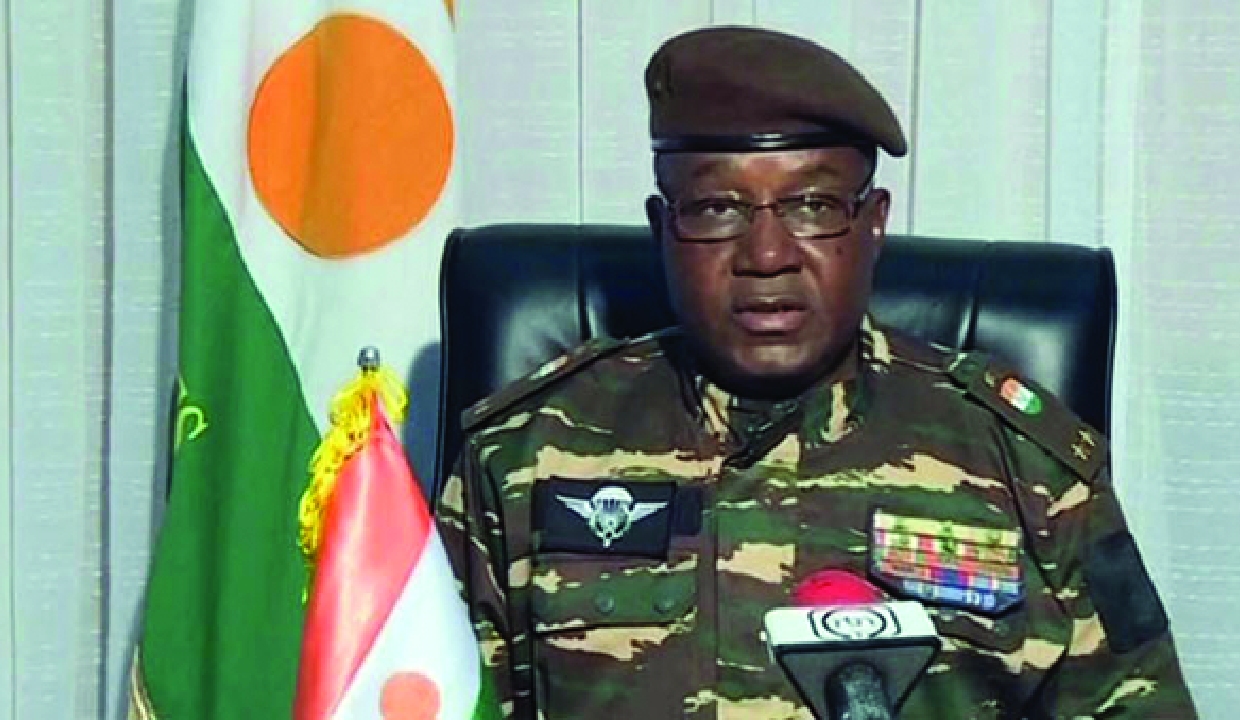
Niger’s military government has reshuffled the country’s top military command less than two weeks after a mutiny in the capital exposed growing tensions within the armed forces and raised fresh questions about the junta’s ability to maintain control.
General Abdourahamane Tchiani, Niger’s military ruler, appointed Brigadier General Mamane Sani Kiaou as the new chief of staff of the armed forces, replacing Major General Moussa Salaou Barmou, who had held the position since the 2023 coup that removed elected President Mohamed Bazoum. The change was announced in a decree signed on September 11 and read on state television.
No official explanation was given for Barmou’s removal. But the timing of the reshuffle has attracted considerable attention because it follows a nearly 24-hour mutiny in Niamey on August 28 and 29, when mostly young soldiers seized fellow servicemen and attacked sensitive locations in the capital.
A Mutiny Exposed Tensions Inside the Military.
The uprising centred on Base 101, a military installation near Diori Hamani International Airport. The mutineers also exchanged fire around the airport and presidential palace, creating one of the most serious internal challenges to Tchiani’s government since it seized power in July 2023.
According to reporting by the Associated Press, the soldiers appeared to be motivated partly by frustration over worsening militant violence and poor conditions within the military. Some of the soldiers reportedly came from regions in western and southern Niger that have been particularly affected by armed-group attacks.
The mutiny was eventually suppressed with assistance from Russia’s Africa Corps, which provided ground and air support to government forces. The fighting resulted in deaths and arrests among the mutineers, while three members of the presidential guard were also killed.
The episode was politically damaging because Tchiani’s junta originally justified its 2023 takeover by accusing the civilian government of failing to protect Niger from extremist violence.
The New Army Chief Brings Battlefield Experience.
Kiaou is not an outsider to Niger’s security establishment. Before his appointment, he served as chief of staff of the army and was involved in military operations against armed groups in the Tillaberi region in western Niger and Diffa in the southeast.
His promotion therefore places an experienced field commander at the top of the armed forces at a time when the government is under pressure to demonstrate that its security strategy is working.
General Abdourahmane Abou Zataka has been appointed to replace Kiaou as army chief of staff. General Ismael K Sidi Omar has also been named deputy chief of the general staff. Sidi Omar previously commanded Base 101, the facility at the centre of the recent mutiny, and remained loyal to Tchiani during the confrontation.
The appointments appear designed not only to refresh the military leadership but also to reinforce loyalty within the command structure.
Russia’s Role Remains Significant.
The reshuffle also comes against the backdrop of Niger’s rapidly changing international security partnerships.



