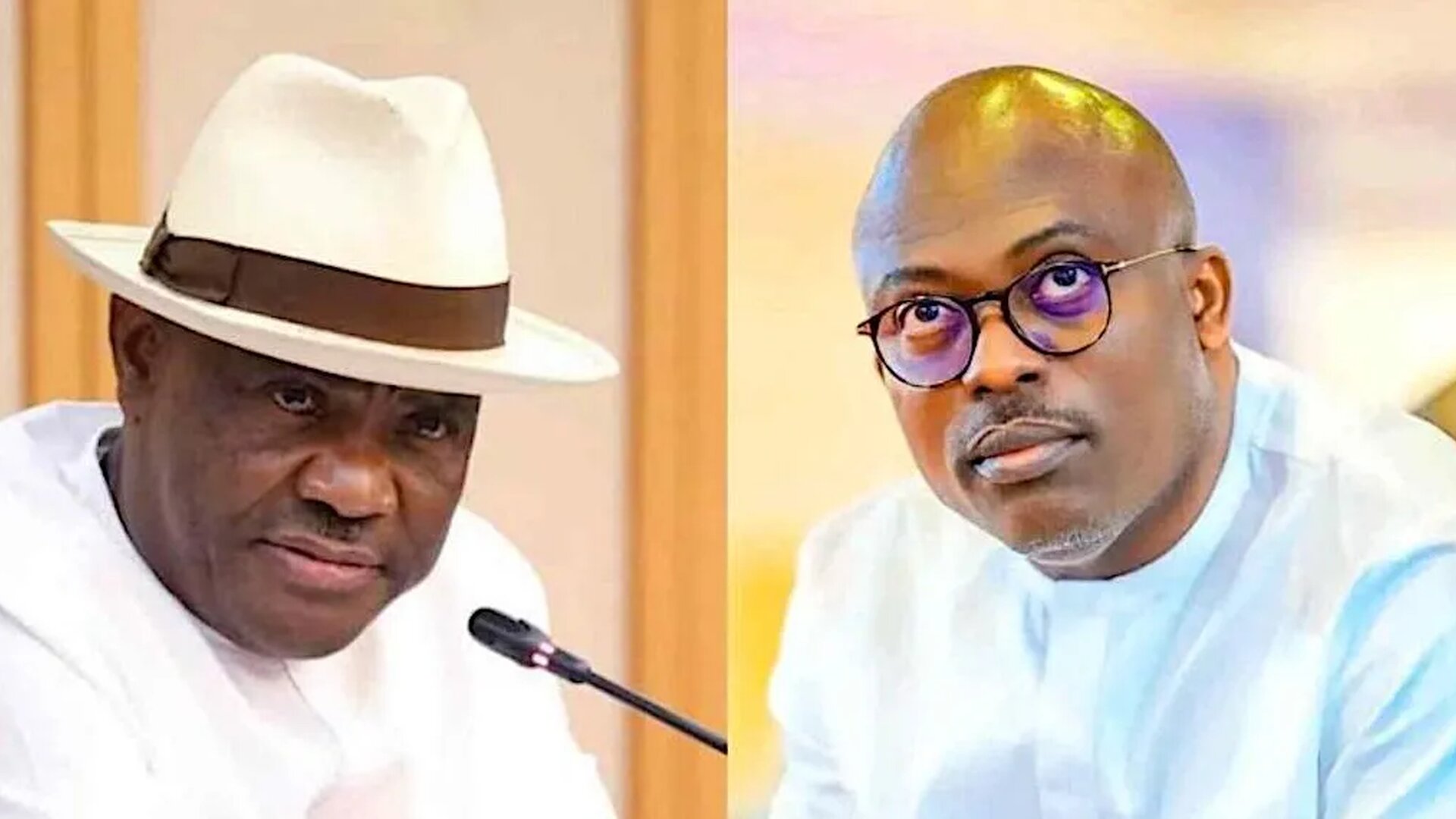
The political future of Rivers State is becoming one of Nigeria’s biggest early battlegrounds ahead of the 2027 general elections, as former governor and current Federal Capital Territory (FCT) Minister Nyesom Wike and Governor Siminalayi Fubara remain at the centre of a power struggle that could reshape the state’s political direction.
The conflict, which began as a disagreement between a political godfather and his successor, has grown into a wider battle over influence, party control and who will determine Rivers State’s future leadership.
From Political Partnership to Power Struggle
When Siminalayi Fubara became governor of Rivers State in 2023, he was widely viewed as the political successor of Nyesom Wike, who governed the oil-rich state from 2015 to 2023.
However, relations between the two politicians deteriorated after disagreements over control of the state’s political structure, appointments and the direction of governance.
The crisis affected the Rivers State House of Assembly, creating rival factions and leading to months of political uncertainty. The dispute eventually attracted national attention, with President Bola Ahmed Tinubu becoming involved in efforts to restore stability.
Wike’s Warning Over Fubara’s Political Future
The latest tension emerged after Nyesom Wike stated that the political crisis had affected Governor Fubara’s chances of seeking a second term in 2027.
Wike argued that Fubara’s political decisions and alliances weakened his position, saying the governor would struggle to secure another term.
The statement has sparked reactions across Nigeria, with supporters of Fubara accusing Wike of attempting to maintain control over Rivers politics, while Wike’s allies argue that his influence remains central to the state’s political calculations.
The Battle for Political Control
Rivers State is one of Nigeria’s most politically important states because of its oil wealth, economic influence and strategic position in the Niger Delta.
Control of the state has historically been shaped by powerful political networks, and the 2027 contest is expected to focus heavily on who controls party structures, local government influence and electoral machinery.
Three major political forces are expected to shape the race:
Nyesom Wike’s political structure
Wike remains one of Nigeria’s most influential political figures and continues to maintain strong networks within Rivers politics. His supporters believe his experience and connections will remain decisive in determining the state’s future leadership.