
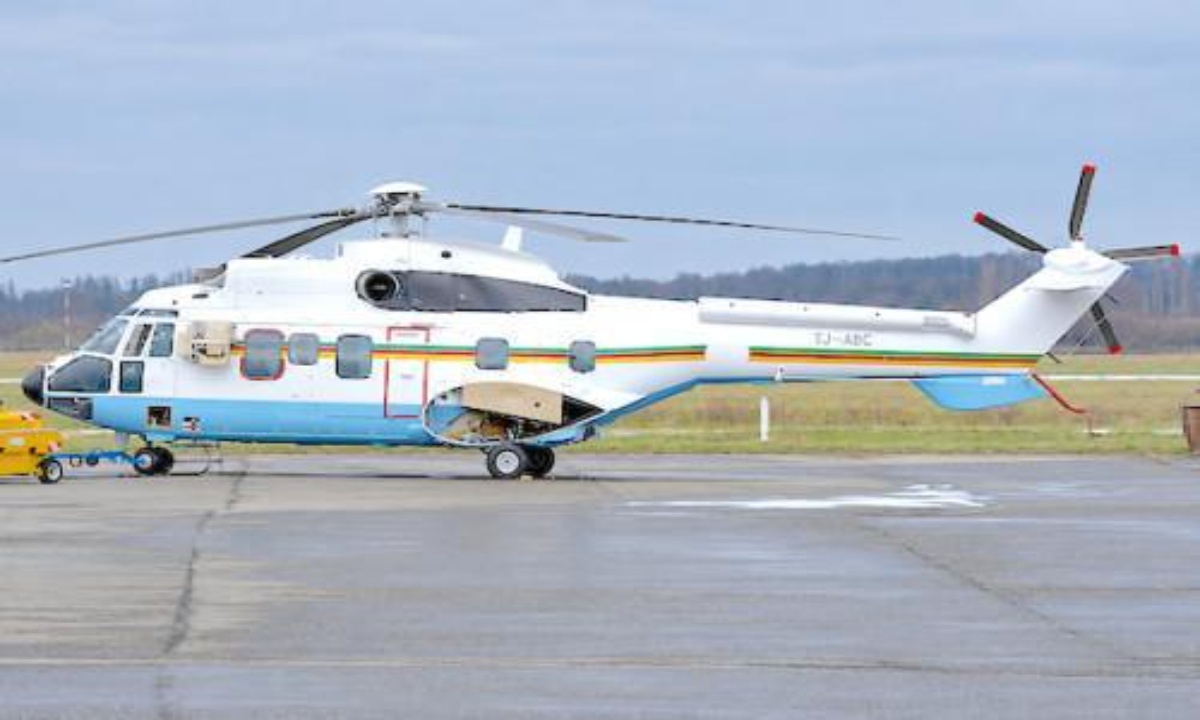
Cameroon has suffered a setback in its attempt to recover about 355 million FCFA linked to the repair of a presidential helicopter after a Qatari court blocked the country’s effort to reclaim the money. The amount, equivalent to roughly US$660,000, was reportedly paid in 2018 to help complete repair work on a helicopter, but Cameroon has since sought to recover the funds through legal proceedings in Qatar.
The case is drawing attention because it involves public money, a presidential aircraft and an international legal dispute stretching back several years. The decision also raises broader questions about how governments manage payments for major public assets and how effectively they can recover funds when contractual or technical disputes emerge across borders.
A 355 Million FCFA Dispute.
The money at the centre of the case was reportedly transferred in 2018 in connection with repairs to a helicopter used by Cameroon’s presidency. According to the current reporting, Cameroon is seeking to recover approximately US$660,000, or about 355 million FCFA, that it says was paid toward completing the repair process.
The legal battle illustrates how relatively modest amounts by the standards of state budgets can become complicated when they involve specialised equipment, international contractors and foreign jurisdictions. A helicopter is a highly technical asset, requiring specialised maintenance, certified parts and qualified engineering teams, meaning disputes over repairs can quickly become contractual and financial disputes.
For Cameroon, however, the issue is not simply about the value of one payment. It also concerns the government’s ability to protect public funds and enforce its interests when transactions involve companies or institutions outside the country.
Why the Qatari Court Matters.
Cameroon’s decision to pursue the matter through the Qatari judicial system reflects the international nature of the underlying transaction. Once a payment, repair arrangement or contractual relationship involves a foreign jurisdiction, recovering disputed funds can require a government to navigate another country’s legal procedures.
That can make the process considerably more difficult than a domestic recovery claim. Cameroon must operate within the legal framework governing the parties and transactions in Qatar, while also establishing its own contractual and financial claims before the relevant court.
The reported decision therefore represents an important setback for the government’s recovery effort, even if it does not necessarily end every possible avenue available to Cameroon under applicable law.
The Presidential Helicopter Connection.
The involvement of a presidential helicopter gives the dispute additional political and public interest. Aircraft used by heads of state are not ordinary commercial assets. Their maintenance is connected to government operations, official travel and the security requirements surrounding senior state officials.
That makes the financial management of such assets particularly sensitive. Payments for repairs, spare parts, maintenance contracts and technical services can involve substantial public resources, while failures to resolve contractual disagreements can leave governments facing additional costs.
The Cameroon case therefore highlights the importance of clear contractual arrangements and strong oversight when public institutions enter into international maintenance agreements.
A Wider Question About Public Money.
The 355 million FCFA at stake may appear relatively small compared with Cameroon’s overall public expenditure, but disputes of this nature raise a broader issue: how effectively can African governments recover public funds when money has already crossed international borders?
The answer often depends on the quality of the original contract, the documentation supporting the payment, the obligations of each party and the jurisdiction governing the agreement. When those elements are disputed, governments can face lengthy legal battles before any money is recovered.



