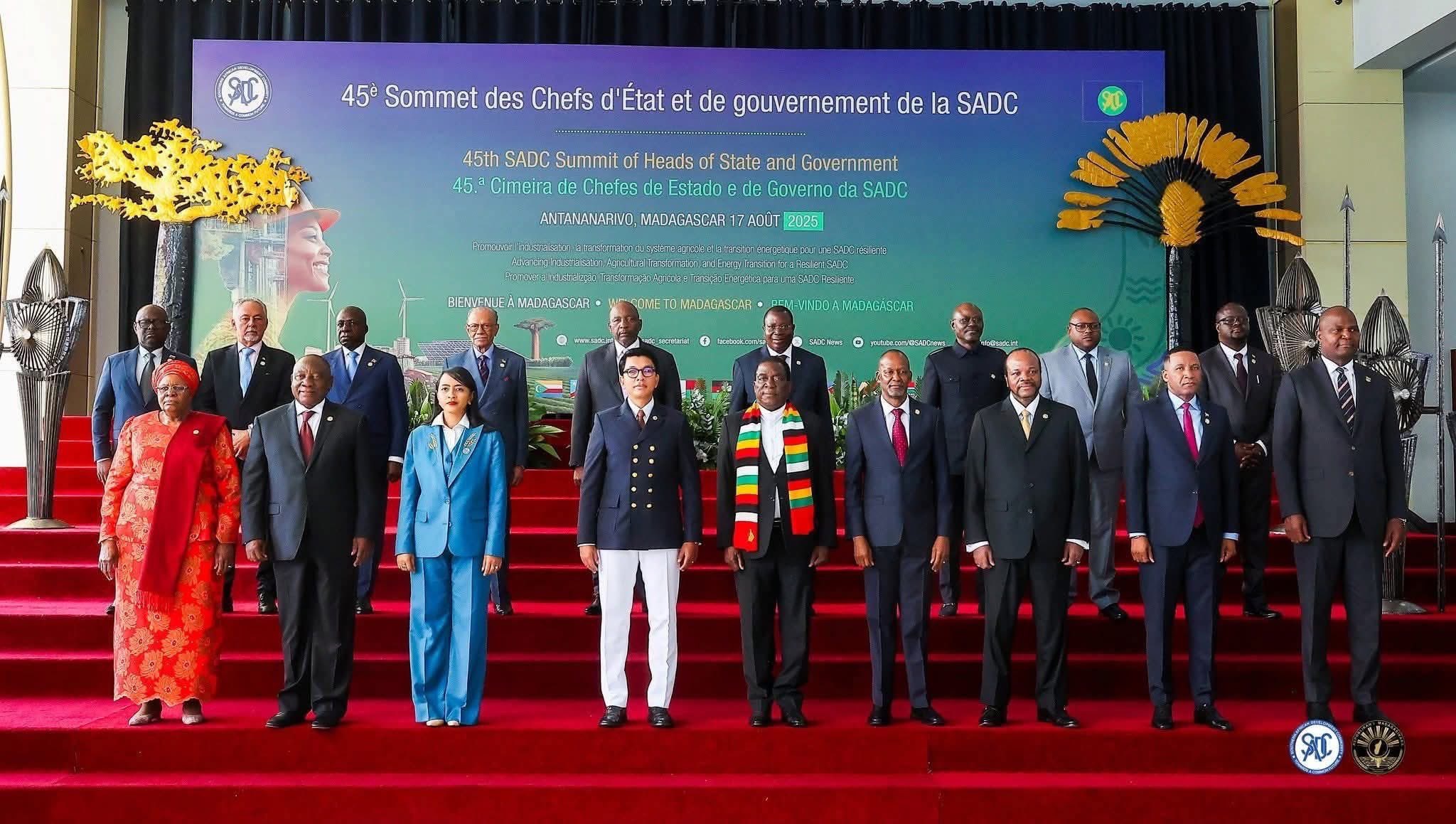
Regional Leaders Gather as South Africa Takes the Chair.
Southern African leaders are meeting in Durban on Monday, 17 August 2026, for the 46th Ordinary Summit of the Southern African Development Community (SADC), with regional integration, migration, economic transformation, youth unemployment and security dominating the political agenda. South African President Cyril Ramaphosa is chairing the summit as South Africa assumes leadership of the 16-member regional bloc for the coming year. The summit is being held at the Inkosi Albert Luthuli International Convention Centre in Durban.
The meeting comes at a critical moment for Southern Africa, where governments are facing the combined pressures of slow economic growth, unemployment, food insecurity, migration and persistent security challenges. For Ramaphosa, the summit is an opportunity to position regional cooperation as a practical economic strategy rather than simply a diplomatic ambition. He has called for SADC countries to make better use of their natural resources, industrial capacity and youthful population to create jobs and strengthen economic growth.
Migration and Xenophobia Take Centre Stage.
One of the most politically sensitive issues surrounding the summit is migration. South Africa has faced growing tensions over undocumented migrants from neighbouring countries, with anti-immigration groups increasingly demanding tighter controls. Ramaphosa has argued, however, that migration cannot be addressed through enforcement alone and that regional governments must tackle the economic and political conditions that drive people to leave their countries.
The South African president has also expressed concern about the treatment of foreign nationals inside South Africa. In a significant diplomatic gesture, Ramaphosa apologised to Mozambican President Daniel Chapo over recent violence against Mozambican nationals. He has described the treatment of foreigners as a source of shame for South Africa and warned that xenophobia threatens the very regional integration that SADC is trying to build.
The issue is particularly important because South Africa’s economy is deeply connected to the rest of the region. Millions of people move across Southern African borders for employment, trade, education and family reasons. Restricting that movement may respond to domestic political pressure, but it can also undermine the cross-border economic relationships that SADC has spent decades trying to strengthen.
Ramaphosa Pushes Economic Integration.
Economic transformation is expected to be another central theme of the summit. Ramaphosa has argued that Southern Africa must move beyond exporting raw materials and instead develop industries capable of processing the region’s resources locally. The approach is particularly relevant as global demand for critical minerals increases and countries compete to secure supplies of copper, lithium, cobalt and other strategic resources.
The summit’s theme reflects this ambition: “Resilient, sustainable and inclusive industrialisation through Infrastructure Development, Agricultural and Critical Minerals Transformation in Pursuit of a Just World.” The agenda places infrastructure, agriculture, critical minerals and industrialisation at the centre of South Africa’s SADC chairmanship.
For Southern Africa, the question is whether regional governments can translate these ambitions into concrete projects. The region has substantial mineral wealth, agricultural potential and renewable-energy resources, but infrastructure gaps, unreliable energy supplies, regulatory differences and limited intra-African trade continue to restrict economic integration.
Youth Unemployment Adds Pressure.
Youth unemployment is another major political concern. Southern Africa has one of Africa’s largest young populations, yet many countries continue to struggle to create sufficient formal employment opportunities. South African International Relations and Cooperation Minister Ronald Lamola has called for greater attention to youth unemployment and hunger, warning that regional development strategies must deliver tangible improvements in people’s lives.
The issue extends beyond employment statistics. Persistent youth unemployment can contribute to migration, political dissatisfaction and social instability. For SADC governments, creating jobs therefore represents not only an economic objective but also a political and security priority.



