For decades, African leaders have spoken about economic integration.
They have imagined a continent where goods move freely from Lagos to Nairobi, from Douala to Johannesburg, and from Cairo to Accra. They have envisioned African companies selling products across borders, factories creating regional supply chains, and consumers benefiting from a market of more than one billion people.
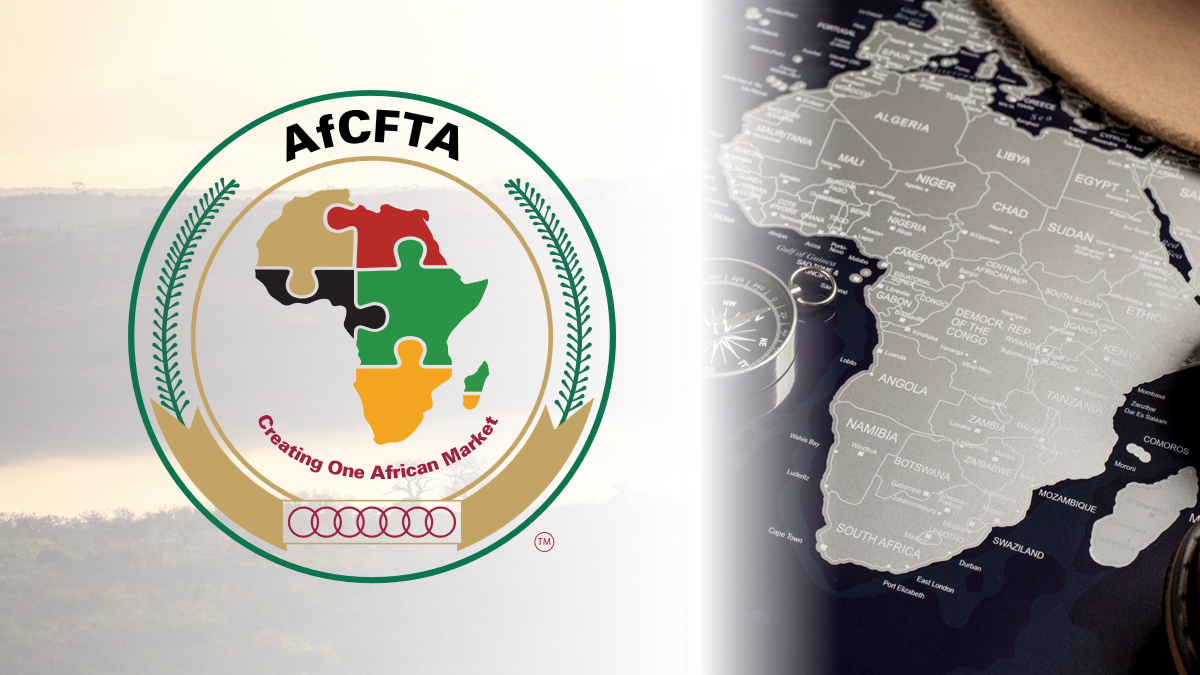
The African Continental Free Trade Area (AfCFTA) was created to turn that vision into reality.
Launched in 2018 and operational from 2021, AfCFTA represents one of the most ambitious economic integration projects in modern history. It brings together 55 African Union member states and aims to create a single market covering approximately 1.4 billion people with a combined GDP exceeding US$3.4 trillion.
The ambition is historic.
But the question remains:
Can AfCFTA overcome decades of fragmented economies, weak infrastructure, political barriers and protectionist policies to truly unite Africa?
The answer will determine whether Africa becomes a global economic player or continues operating as a collection of small, disconnected markets.
Africa’s Economic Paradox
Africa is a continent of enormous economic potential.
It has a young population, vast natural resources, growing cities and a rapidly expanding consumer market.
Yet African countries trade surprisingly little with each other.
According to the United Nations Economic Commission for Africa (UNECA), intra-African trade accounts for roughly 15% to 18% of Africa’s total trade, compared with around 60% in Europe and more than 40% in North America and Asia.
This means many African countries trade more with countries outside the continent than with their neighbours.
A farmer in Cameroon may find it easier to export products to Europe than to neighbouring Nigeria.
A manufacturer in Kenya may face fewer barriers selling goods abroad than across certain African borders.
This fragmentation limits economic growth.
The Vision Behind AfCFTA
The architects of AfCFTA argue that Africa cannot industrialise through isolated national markets.
Most African countries have relatively small domestic markets compared with global competitors.
Nigeria, Africa’s largest economy, has more than 220 million people.
But many African countries have populations below 20 million.
For manufacturers, producing goods at scale requires larger markets.
AfCFTA aims to solve this by creating a continental marketplace where companies can expand beyond national borders.
Wamkele Mene, Secretary-General of the AfCFTA Secretariat, has repeatedly argued that the agreement is not simply a trade deal but a development strategy designed to transform Africa from a supplier of raw materials into a producer of higher-value goods.
The objective is not only more trade.
It is more African manufacturing, more jobs and more economic independence.
The Opportunity Is Enormous
The World Bank estimates that AfCFTA could increase Africa’s income by billions of dollars and lift millions of people out of poverty if fully implemented.
The agreement is expected to:
- Reduce tariffs on most goods traded between African countries.
- Improve market access for businesses.
- Encourage regional supply chains.
- Increase investment.
- Support industrial development.
For example, a company producing electric vehicle components could source minerals from the Democratic Republic of Congo, manufacturing expertise from South Africa, technology services from Kenya, and assemble products in another African country.
Instead of exporting raw materials and importing finished goods, Africa could build complete value chains.
But Agreements Do Not Automatically Create Trade
The biggest challenge facing AfCFTA is implementation.
Signing a trade agreement is easier than changing how economies operate.
Many African businesses still face practical obstacles when trying to trade across borders.
A truck carrying goods from one African country to another may encounter:
- Multiple customs procedures.
- Long border delays.
- Different regulations.
- High transportation costs.
- Unpredictable fees.
For small businesses, these barriers can make regional trade almost impossible.
A large multinational company may absorb these costs.
A small entrepreneur cannot.
Infrastructure Remains Africa’s Biggest Barrier
Trade requires roads, railways, ports, electricity and digital systems.
Africa’s infrastructure deficit remains one of the greatest obstacles to economic integration.
A product can only move freely if transport networks exist to move it.
The distance between two African cities can sometimes be more expensive to cover than shipping goods between Africa and Europe.
This is one reason why African countries often trade more easily with external markets.
The African Development Bank estimates that Africa requires hundreds of billions of dollars in infrastructure investment to close its development gap.
Without better infrastructure, AfCFTA risks becoming an agreement that exists mainly on paper.
The Currency Problem
Another major challenge is payment.
Africa has more than 40 currencies, creating difficulties for businesses trading across borders.
A company in Ghana selling goods to a buyer in Kenya may need to convert currencies through international financial systems, increasing costs and delays.
The introduction of the Pan-African Payment and Settlement System (PAPSS), developed by Afreximbank, is designed to address this challenge by allowing African businesses to settle transactions using local currencies.
Supporters believe PAPSS could reduce dependence on foreign currencies such as the US dollar and strengthen African economic sovereignty.
However, adoption remains a work in progress.
The Nigeria Question
No discussion about AfCFTA can ignore Nigeria.
As Africa’s largest economy and one of its biggest consumer markets, Nigeria’s participation is crucial.
The country initially faced concerns about protecting local industries from foreign competition.
Many Nigerian businesses feared that opening markets too quickly could expose them to cheaper imported products.
Former WTO Director-General Ngozi Okonjo-Iweala has consistently argued that Nigeria and other African countries must embrace regional trade while also investing in competitiveness.