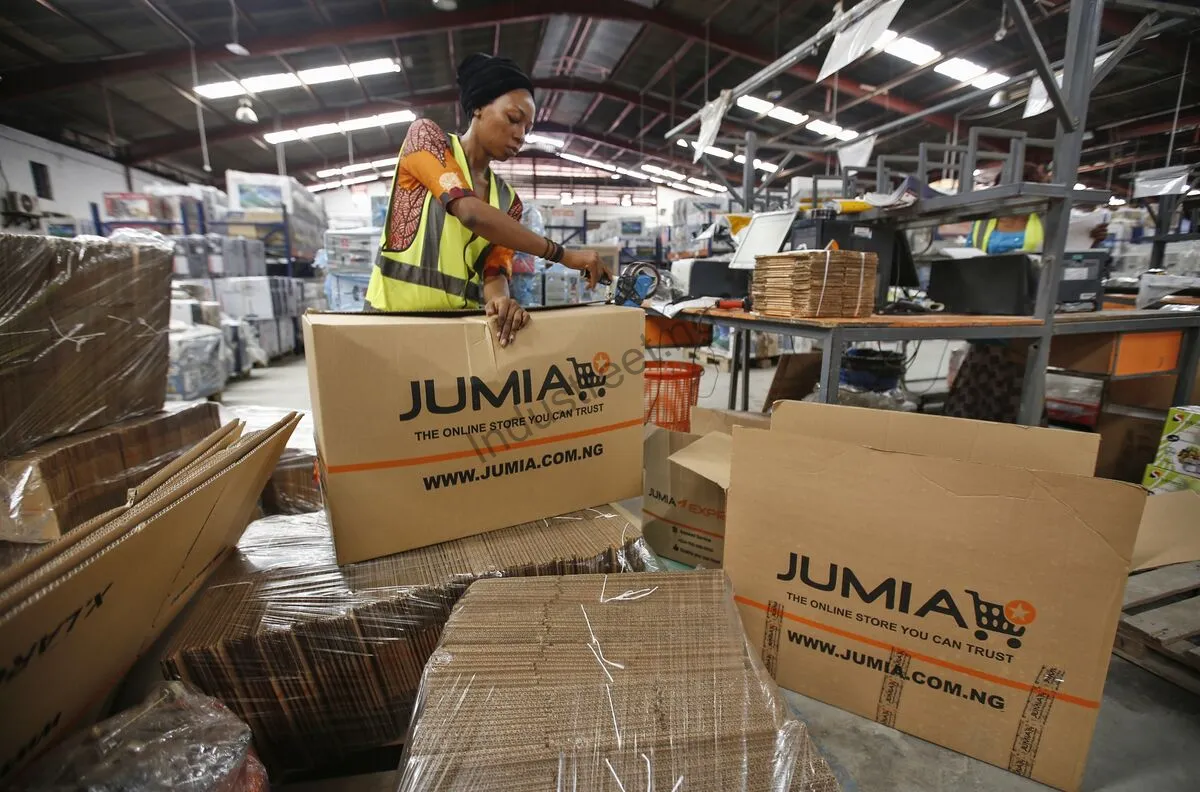
Jumia has secured $50 million in new equity financing, giving the African e-commerce company fresh capital as it attempts to move closer to profitability. The announcement was made on August 12, with further reporting published today, August 13. The round is anchored by a $25 million investment from the International Finance Corporation (IFC), the private-sector arm of the World Bank Group, alongside existing shareholders and new investors including AXIAN.
The investment is significant not simply because of its size, but because of what it says about investor confidence in Africa’s digital consumer market at a time when Jumia is under pressure to demonstrate that scale can eventually translate into sustainable profits.
Why Investors Are Still Betting on Jumia.
Jumia’s latest financial results provide part of the explanation.
For the second quarter of 2026, the company reported 23% year-on-year growth in gross merchandise volume (GMV), while gross profit increased by 28%. Revenue also rose 14% to approximately $52 million, according to reporting on the company’s results.
Nigeria has been particularly important to that growth. Jumia’s Nigerian GMV increased by 36% year-on-year in the second quarter, demonstrating that demand for online commerce remains strong in one of Africa’s largest consumer markets.
These numbers suggest that the fundamental market opportunity has not disappeared. The challenge is whether Jumia can convert that opportunity into a consistently profitable business.
The $50 Million Is About More Than Expansion.
The new capital arrives during a critical phase of Jumia’s restructuring.
The company has spent recent years reducing costs, concentrating on markets with stronger potential and attempting to improve operational efficiency. It has also exited markets that it considered less attractive, including Algeria earlier this year.
Jumia says the new financing will support its continued growth strategy as it works towards profitability.
That makes the latest investment different from the kind of funding associated with an early-stage technology company simply trying to expand as quickly as possible. Jumia is now being asked to prove that the infrastructure it has built across Africa can produce sustainable returns.
IFC’s Investment Sends an Important Signal.
The participation of the IFC is perhaps the most significant element of the transaction. The institution is investing $25 million, effectively providing half of the $50 million capital raise.
For African technology investors, this matters because the IFC is not simply a venture capital fund looking for a rapid exit. Its involvement represents institutional backing for the development of digital commerce and infrastructure in African markets.
The investment therefore sends two messages at the same time. First, Africa’s digital consumer economy remains attractive. Second, investors still believe Jumia has a role to play in building that economy.
But Jumia Still Has Something to Prove.
The positive numbers should not hide the company’s long-running challenge.
Jumia has struggled to turn its large customer base and regional footprint into consistent profitability. Its current strategy is therefore being judged less on how many markets it can enter and more on whether it can build a business that generates sustainable earnings.