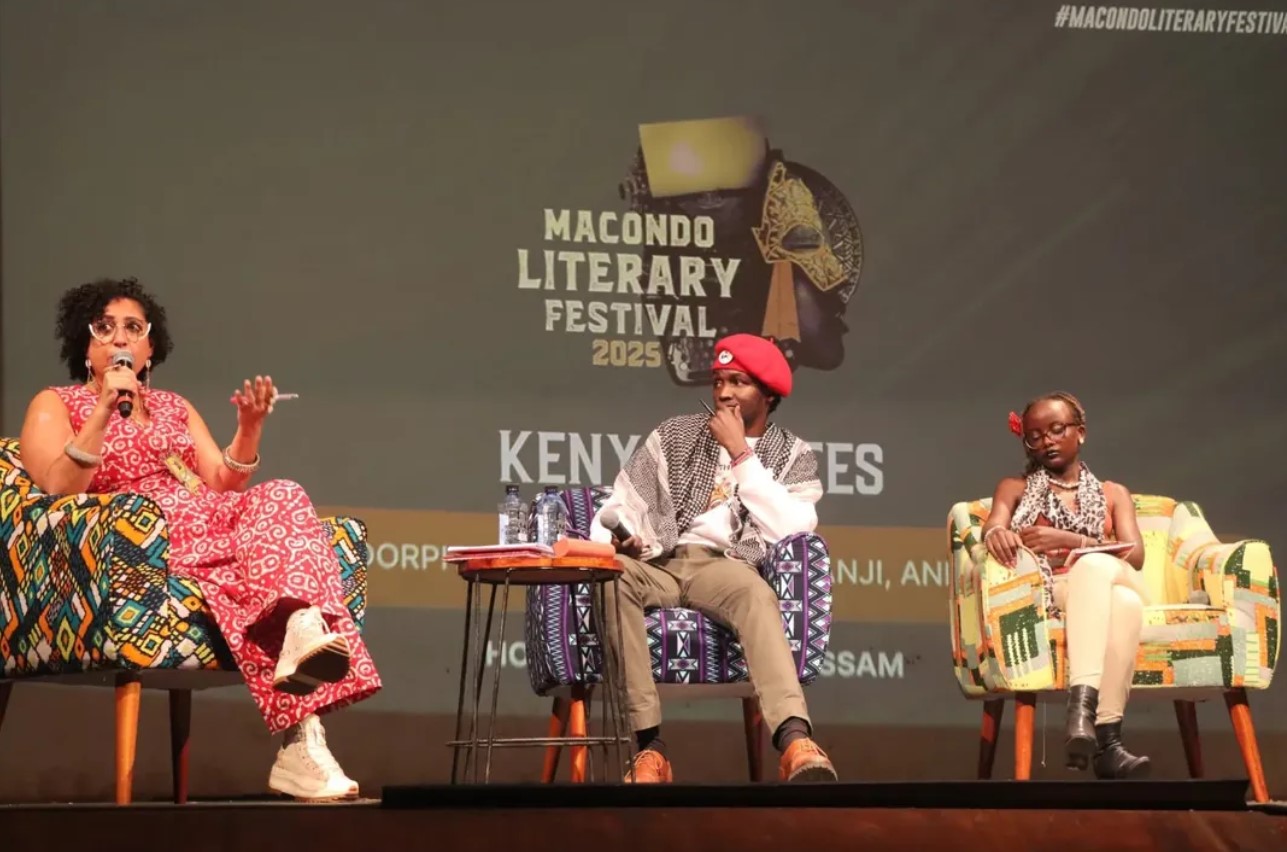
The Macondo Literary Festival is returning to Nairobi this week with a programme designed to put African memory, history and storytelling at the centre of conversations about the continent’s future. The sixth edition of the festival will take place from September 18 to 20 at the Kenya Cultural Centre under the theme “Ink, Sea, Silence,” bringing together writers and cultural voices from Africa, the diaspora and beyond.
Founded by Macondo Book Society co-founder Anja Bengelstorff and led alongside award-winning Kenyan novelist Yvonne Adhiambo Owuor, the festival has become an important platform for literary and cultural conversations in East Africa. This year’s edition expands that conversation beyond books to include music, film, dance, food and visual art.
The timing is significant. Across Africa, there is growing interest in how the continent’s history is documented, who gets to tell African stories and how younger generations can reclaim narratives that were shaped for decades by outsiders.
African Memory Takes Centre Stage.
The 2026 festival will place particular attention on cultural memory and archives, examining how African histories have been recorded, preserved and sometimes distorted. Organisers say the programme will explore stories that have been erased, displaced or written from perspectives outside the continent.
That focus reflects a broader cultural movement across Africa. Writers, filmmakers, musicians and visual artists are increasingly questioning inherited narratives and creating work that presents African experiences from African perspectives.
Literature remains central to that process because books can preserve experiences that may otherwise disappear. Through fiction, poetry, memoir and historical writing, African writers are documenting wars, migration, colonialism, family histories, cultural traditions and the rapidly changing realities of modern African societies.
A Festival Bringing Different Africas Together.
Macondo 2026 will feature writers from different parts of Africa and the African diaspora, creating a platform for audiences to encounter perspectives that extend beyond national boundaries.
Among the international guests are Canadian writer Esi Edugyan, Sudanese novelist Abdelaziz Baraka Sakin, Nigerian writer and curator Emmanuel Iduma, Indian writer Meena Kandasamy, Botswana novelist Lauri Kubuitsile and Egyptian writer Yasmine El Rashidi.
Their participation reflects one of the festival’s central ideas: Africa cannot be reduced to a single story. The continent contains hundreds of cultures, languages, political experiences and historical memories, and its literature provides a way to bring those differences into conversation.
For Nairobi audiences, the international programme also creates an opportunity for African writers to engage directly with authors and cultural thinkers from outside the continent.
Beyond Books and Into Popular Culture.
One of the most interesting developments at this year’s festival is its expansion beyond traditional literary programming. Macondo will connect literature with music, film, dance, food and visual art, recognising that African storytelling does not exist only on the printed page.
That approach reflects the way younger African audiences increasingly consume culture. Stories move between novels, films, songs, social media, podcasts, visual art and live performances, creating an interconnected creative economy rather than separate cultural industries.
For Africa’s creative sector, this intersection is becoming increasingly important. Writers can inspire filmmakers, musicians can draw from literature, visual artists can reinterpret historical narratives and filmmakers can introduce literary works to entirely new audiences.
Macondo’s broader programme therefore mirrors the changing nature of African cultural production.