Continent Faces a Critical Test as Artificial Intelligence Adoption Accelerates.
Africa’s ability to capture the economic benefits of artificial intelligence could depend as much on public trust as on technology itself, Microsoft has warned, as governments and businesses across the continent accelerate efforts to integrate AI into their economies. Akua Gyekye, Microsoft’s Head of Government Affairs for Africa, said the conversation has moved beyond whether African countries will adopt AI to whether they can create the conditions necessary for the technology to be used responsibly, confidently and at scale. Her comments were published on August 24, 2026, making the warning one of the latest interventions in Africa’s rapidly developing AI debate.
The warning comes at a critical moment for the continent. Governments from Nigeria and Kenya to South Africa, Egypt and several other African countries are developing national AI strategies, investing in digital infrastructure and attempting to build the skills required to participate in the global AI economy. Yet the race to adopt the technology is unfolding alongside concerns about privacy, misinformation, cybersecurity, algorithmic bias and the ability of governments to hold technology companies accountable.
Africa’s AI Opportunity Is Measured in Trillions.
The potential economic opportunity is enormous. The African Development Bank estimates that inclusive development and deployment of artificial intelligence could generate as much as $1 trillion in additional GDP across Africa by 2035. Agriculture, wholesale and retail, manufacturing, financial services and healthcare are expected to account for approximately 58 percent of those potential gains, representing about $580 billion.
Those figures help explain why African governments are increasingly treating AI as an economic development issue rather than simply another technology trend. If AI can improve agricultural productivity, automate administrative processes, expand access to financial services and support healthcare delivery, it could help African economies overcome some of the structural constraints that have limited productivity for decades.
But the size of the opportunity does not guarantee that Africa will capture it.
The continent still faces major shortages in computing capacity, reliable electricity, digital infrastructure, capital and specialised skills. Microsoft has also highlighted the gap in AI usage between the global North and South. Its Global AI Diffusion Report for the first quarter of 2026 found generative AI usage among working-age populations at 27.5 percent in the global North, compared with 15.4 percent in the global South.
Trust Could Become Africa’s Missing AI Infrastructure.
For Gyekye, the question of trust is becoming increasingly important because AI systems will eventually influence decisions that directly affect people’s lives.
If citizens do not trust AI-powered financial systems, healthcare tools, government services or educational platforms, adoption could remain limited even where the underlying technology is available.
The issue is not simply whether an AI system works. People also need confidence that their data will be protected, that automated decisions can be challenged and that companies and governments will remain accountable when AI systems make mistakes.
A country can invest millions of dollars in computing power and digital connectivity, but if citizens believe AI systems are unsafe, biased or opaque, those investments may fail to generate their expected economic returns.
Africa Cannot Afford to Become Only a Consumer.
Another challenge is ensuring that Africa does not become primarily a market for AI products developed elsewhere.
The continent has a relatively small share of the world’s computing infrastructure despite representing a significant proportion of the global population. This leaves African countries heavily dependent on foreign technology companies for computing power, AI models, cloud infrastructure and investment.
African governments increasingly want to develop local talent, build domestic data infrastructure and create AI systems capable of understanding African languages and local economic realities. The objective is not necessarily to cut Africa off from international technology companies, but to ensure that African countries have enough capacity to influence how AI is developed and deployed.
The debate is particularly important because AI models trained primarily on data from other parts of the world may not always perform equally well when applied to African languages, cultures and local conditions.
Nigeria Is Already Putting Trust at the Centre of Its AI Strategy.
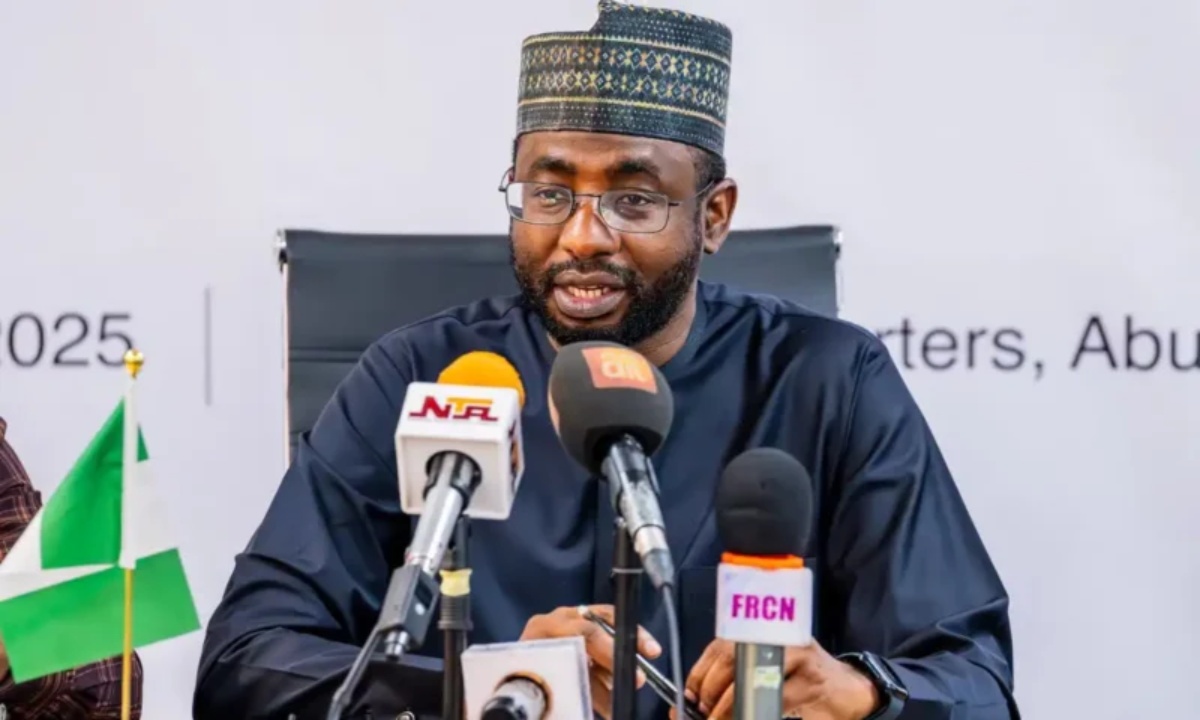
At the AI Summit Nigeria 2026, organised in partnership with Microsoft, NITDA and MTN, Nigerian officials stressed that trust, accountability and transparency would be essential to the country’s AI ambitions. NITDA Director-General Kashifu Inuwa argued that Nigeria should move beyond being a consumer of foreign intelligence and develop local talent, research capacity and home-grown AI solutions.
Microsoft’s participation in Nigeria’s AI discussions also reflects the company’s broader push to encourage responsible AI adoption across Africa.
The challenge for Nigeria and other African countries will be moving from policy documents and conferences to practical implementation.
A national AI strategy is only valuable if businesses, schools, government agencies and ordinary citizens can actually benefit from it.