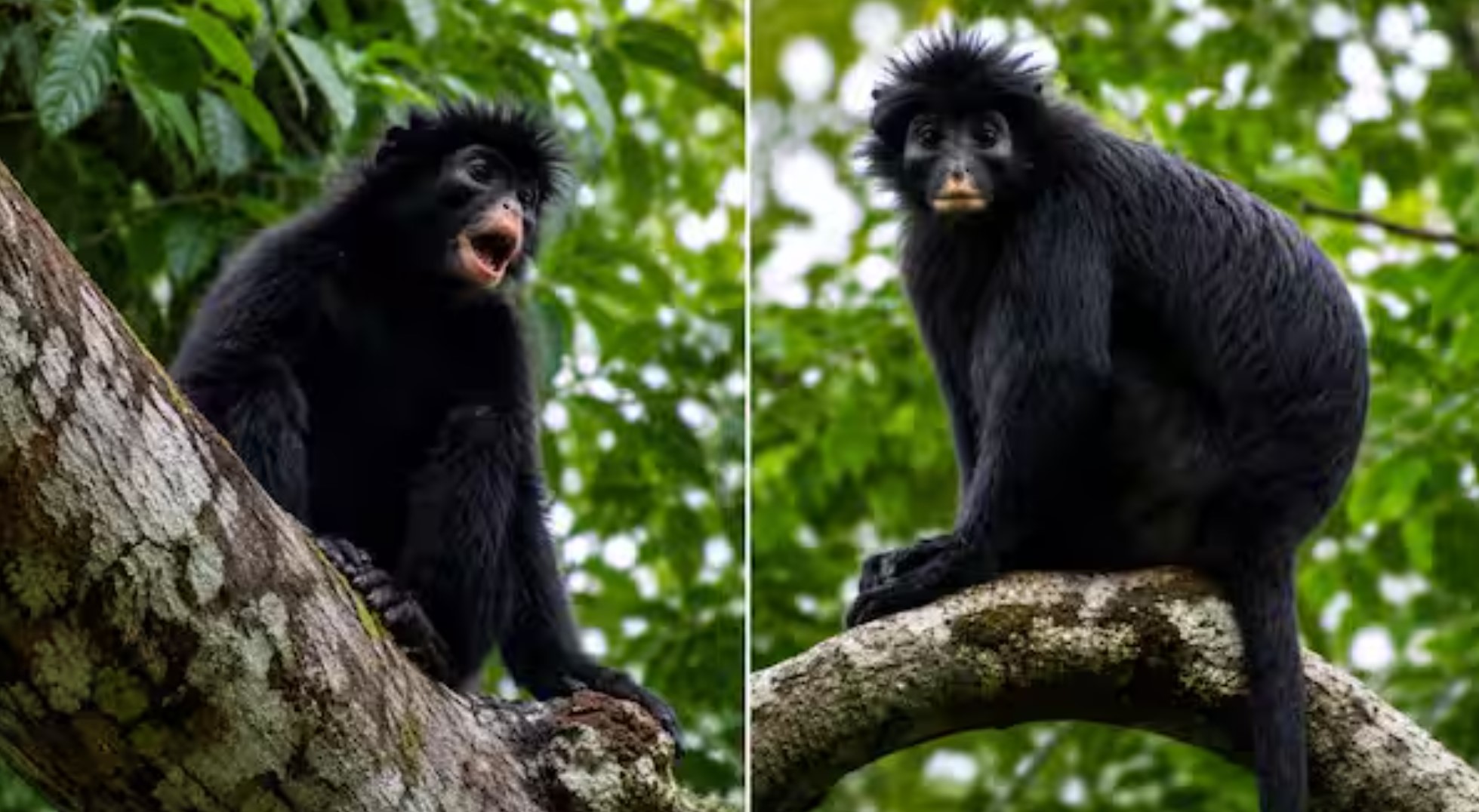
Scientists have confirmed the discovery of a previously unknown monkey species in the Democratic Republic of the Congo (DRC), a breakthrough that is being hailed as one of the most significant wildlife discoveries in Central Africa in recent years.
The new primate, identified after years of field research and genetic analysis, was found in the dense rainforests of the Congo Basin, one of the world’s richest ecosystems. Researchers say the discovery highlights the extraordinary biodiversity of the region and underscores the importance of protecting one of the planet’s largest remaining tropical forests.
Years of Research Led to the Discovery
The discovery follows extensive scientific expeditions involving wildlife experts, conservationists, and local communities who have long reported sightings of a monkey unlike any previously documented species.
Researchers collected photographs, behavioural observations, and genetic samples over several years before confirming that the animal is genetically distinct from other known monkey species found in Central Africa.
Scientists say modern DNA analysis played a crucial role in verifying that the primate represents an entirely separate species rather than a variation of an existing one.
Unique Characteristics Identified
The newly identified monkey is distinguished by its unique facial markings, body coloration, vocalisations, and genetic profile.
Researchers also observed differences in its feeding habits, social behaviour, and habitat preferences compared with closely related monkey species living in the Congo Basin.
Although scientists are continuing to study the animal, early findings suggest it has adapted to a very specific forest environment, making its long-term survival closely tied to the health of its habitat.
Congo Basin Remains a Global Biodiversity Hotspot
The discovery once again highlights the ecological importance of the Congo Basin, the world’s second-largest tropical rainforest after the Amazon.
Stretching across several Central African countries, the forest is home to thousands of plant and animal species, many of which are found nowhere else on Earth. It also plays a vital role in regulating the global climate by storing vast amounts of carbon and supporting regional rainfall patterns.
Scientists believe the region still contains many undiscovered species because large areas remain difficult to access and have never been comprehensively studied.