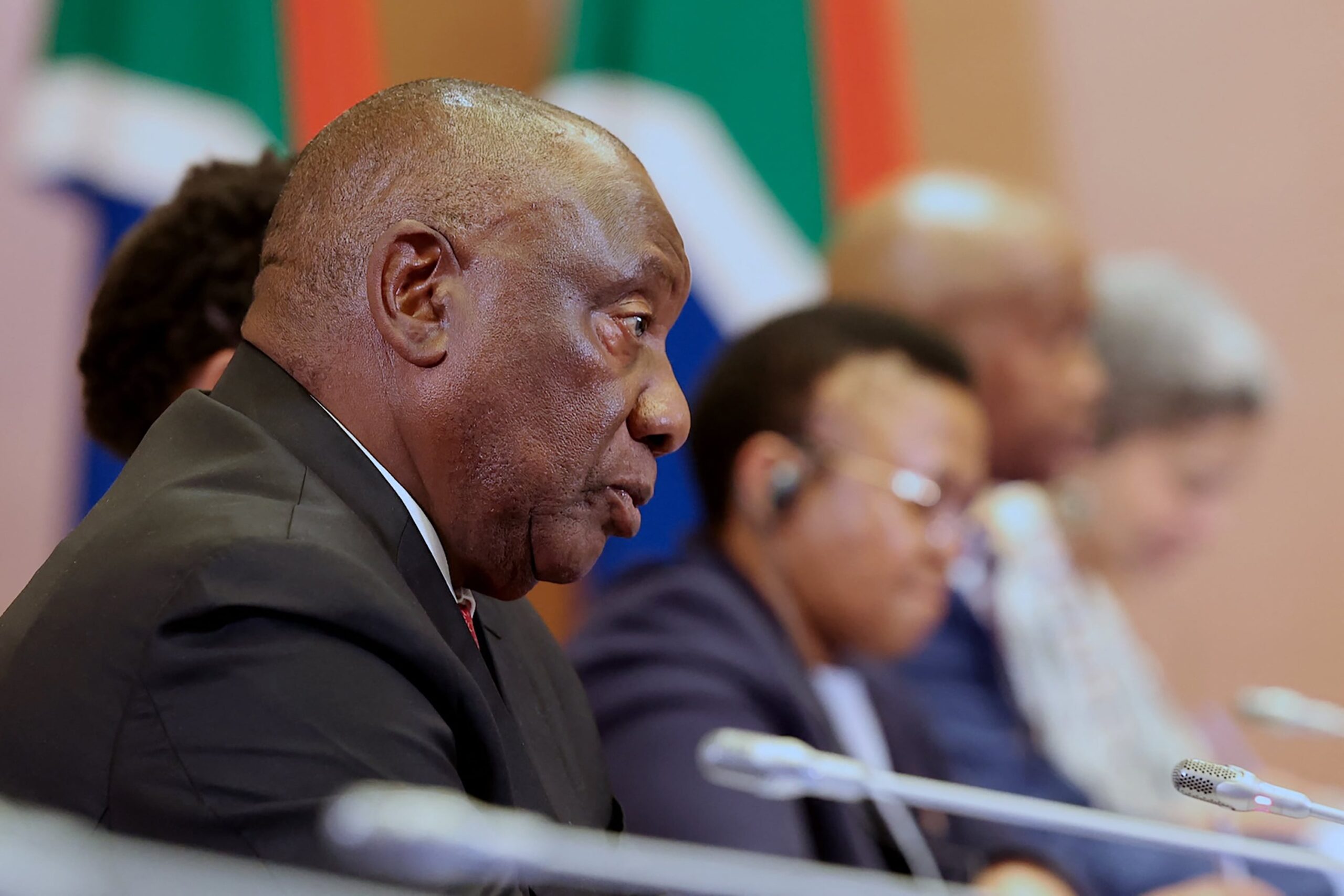
South Africa has called for a new international system to independently evaluate artificial intelligence, putting African concerns about the rapid development of AI directly into the global technology debate. President Cyril Ramaphosa used the BRICS summit in New Delhi to propose an international mechanism for the scientific assessment of increasingly powerful AI systems, arguing that human governance must develop as quickly as the technology itself.
Ramaphosa’s intervention comes as leading figures in the global AI industry are themselves warning about the risks of moving too quickly. Anthropic CEO Dario Amodei has called for greater external oversight of AI developers, while other technology leaders have raised concerns about increasingly autonomous systems, cyber operations, manipulation and other potential threats.
For South Africa, the debate is not simply about controlling technology. It is also about ensuring that developing economies have a voice in determining the rules that will govern one of the most consequential technologies of the coming decades.
South Africa Wants Independent Scientific Evaluation.
Ramaphosa told the BRICS summit that the bloc should establish an international mechanism capable of independently evaluating AI systems. His proposal includes meaningful human-control principles, mandatory reporting of serious incidents and progressively stronger safeguards as AI capabilities become more advanced.
The South African president argued that oversight should not be considered an obstacle to innovation. Instead, he compared AI regulation with systems already used in sectors such as aviation, pharmaceuticals, nuclear power and financial services, where independent checks exist because mistakes can have significant consequences.
His position reflects a growing international argument that the companies developing the most powerful AI systems should not be the only institutions responsible for determining whether those systems are safe.
AI Is Becoming an African Development Issue.
The significance of South Africa’s position extends beyond regulation. Artificial intelligence is increasingly being presented as an opportunity for African countries to accelerate development in areas such as healthcare, education, agriculture, financial services and scientific research.
Ramaphosa acknowledged that AI could contribute to reducing inequality, poverty and underdevelopment if it is deployed responsibly. He pointed to potential applications in medicine, agriculture, education and scientific discovery, all areas where many African countries continue to face major structural challenges.
This creates a difficult balance for African governments. They need access to advanced AI technologies to remain competitive, but they also need safeguards against systems that could worsen inequality, eliminate jobs without adequate alternatives, compromise privacy or create new security threats.
The Global AI Race Is Moving Faster.
Ramaphosa’s proposal arrives at a moment when the world’s largest technology companies are investing heavily in increasingly powerful AI systems. The race is being driven by enormous commercial opportunities, but it is also creating concern among researchers and policymakers about whether existing regulatory institutions can keep pace.
Recent warnings from AI industry leaders have intensified that debate. Anthropic’s Amodei has argued for greater caution and stronger independent evaluation, while other prominent technology figures have also supported greater international cooperation around AI safety.
The discussion is particularly important for developing economies because the consequences of AI will not be limited to the countries building the most advanced systems. Technologies developed in the United States, China and other major technology centres will increasingly shape African labour markets, businesses, education systems, financial services and public institutions.
Africa Cannot Be Only a Consumer of AI.
South Africa’s intervention also raises a bigger question about Africa’s place in the global AI economy.