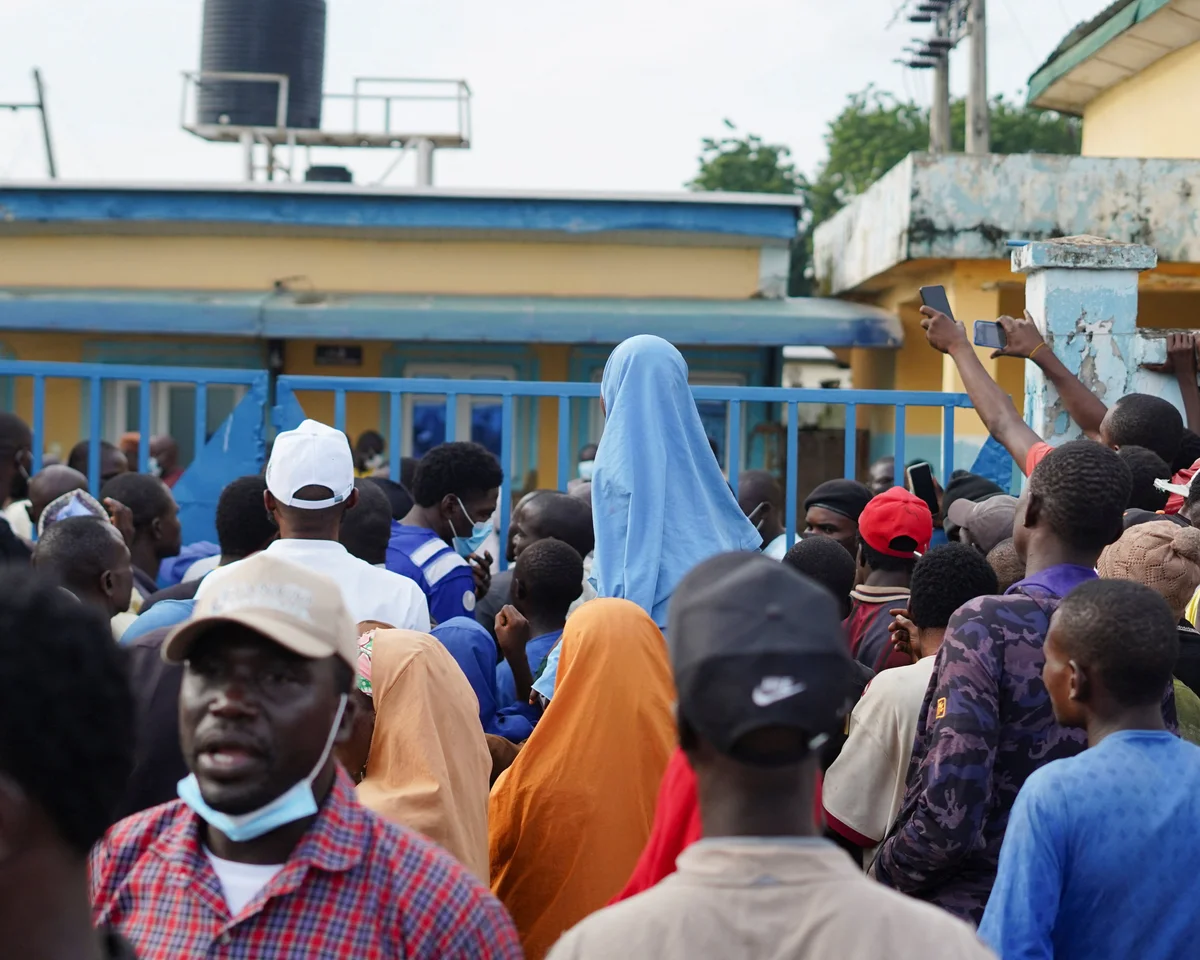
A war economy squeezing ordinary households.
Sudan’s economic crisis is deepening as the country’s prolonged war continues to destroy productive activity, weaken public institutions and erode the purchasing power of millions of people. More than three years after fighting erupted between the Sudanese Armed Forces and the Rapid Support Forces, the economic consequences are increasingly being felt in markets and households far beyond the immediate front lines.
In Omdurman, one of the country’s major urban centres, merchants and residents are reporting sharp increases in the prices of basic food items including sugar, beans, lentils and onions. The uncertainty surrounding exchange rates is also making it difficult for traders to restock, with some merchants reportedly holding onto goods because they fear that replacing them will cost substantially more.
The result is an economy in which even households that previously managed to survive on regular salaries are finding it increasingly difficult to meet basic needs.
The collapse of purchasing power.
The depreciation of the Sudanese pound against the US dollar has become one of the central drivers of the crisis. As the currency weakens, the cost of imported goods rises, creating pressure that moves through the entire supply chain and ultimately reaches consumers.
Economic researcher Abdullah Mohamed Ali told Africanews that the decline of the currency is directly connected to rising prices, with increases in the dollar’s value translating into higher costs for food and other necessities. For households whose incomes have remained largely stagnant, the gap between earnings and living costs is becoming impossible to ignore.
Civil servants, teachers, health workers and pensioners are among those facing particularly severe pressure because their salaries have lost much of their purchasing power. Millions of families are now cutting expenditure on food, medicine and education, while increasingly depending on borrowing, debt or humanitarian assistance to get through the month.
War has destroyed the foundations of the economy.
The economic crisis cannot be separated from the conflict that began in April 2023. Fighting has disrupted agriculture, trade and industry while damaging infrastructure and contributing to the collapse of state institutions and public services.
Resources that would normally support production, investment and development have instead been redirected towards a prolonged military confrontation. The disruption has contributed to rising unemployment, poverty, hunger and food insecurity, leaving households exposed to both the direct effects of conflict and the secondary shock of economic collapse.
The consequences are particularly serious in a country where millions of people have already been displaced and where humanitarian organisations are struggling to maintain assistance amid enormous needs.
Food insecurity becomes an economic problem.
Sudan’s economic deterioration is also reinforcing its food crisis. Higher transportation, fuel and input costs make it more expensive for farmers and traders to produce and move food, while currency weakness makes imported commodities increasingly unaffordable.
Earlier reporting showed that Sudanese farmers were already struggling with higher diesel and fertiliser prices, while millions of people faced acute hunger. The combination of weakened agricultural production, disrupted markets and declining household purchasing power creates a cycle in which food becomes more expensive at precisely the moment when families have less money to buy it.