Egyptian pop star Tul8te has become one of North Africa’s most intriguing musical success stories, turning a mysterious masked persona, nostalgic sound and distinctly Egyptian identity into a rapidly expanding global career. In just four years, the artist has moved from releasing music independently to becoming one of the most commercially successful young artists in North Africa, while his music is now reaching audiences far beyond Egypt and the wider Arab world.
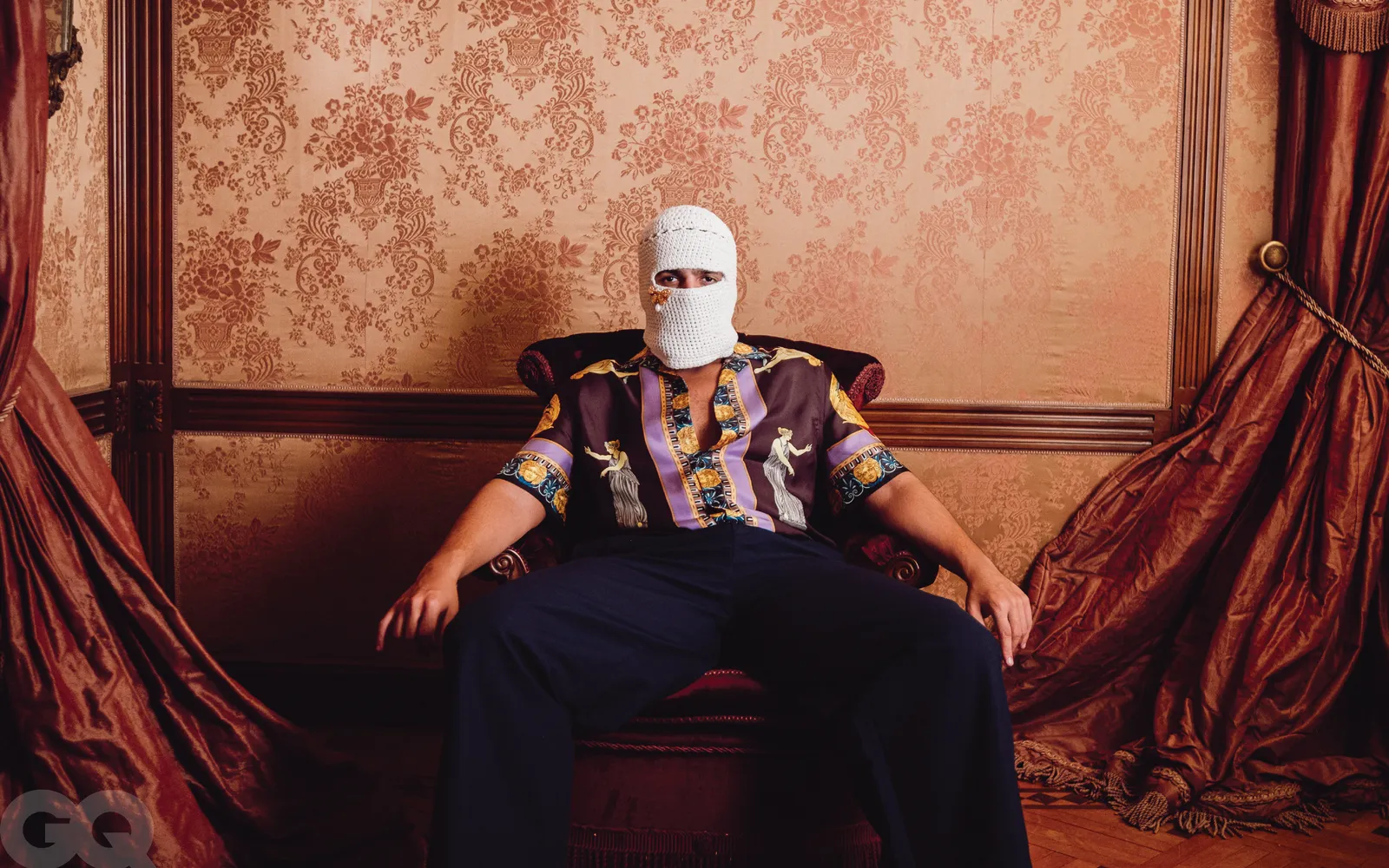
The latest sign of his growing international influence is his appearance on the global music charts. As of September 9, Tul8te’s COLORS performance ranked No. 22 among YouTube’s global top music videos, while the artist is currently on his first world tour and continues to build millions of followers across social media and streaming platforms. His rise is particularly notable because he has achieved much of it while maintaining a deliberately mysterious public image, most visibly represented by the white crochet mask that has become inseparable from his identity.
The Mask Became Part of the Music.
Tul8te’s anonymity could easily have been a marketing gimmick that disappeared once audiences became familiar with his music. Instead, the mask has become an important part of the mythology surrounding the artist. He has maintained the visual identity even though he is no longer completely anonymous, creating a character that allows listeners to focus on the music while also giving them room to project their own ideas onto him.
That approach has worked particularly well with a younger audience. Tul8te’s music combines romantic themes, Egyptian pop influences, Spanish guitar, tabla rhythms and warm analogue production with a contemporary sensibility that feels designed for Gen Z listeners. Music industry figures interviewed by OkayAfrica describe his approach as a successful attempt to make sounds associated with earlier generations feel fresh again.
Nostalgia Became His Secret Weapon.
Tul8te’s breakthrough did not come simply because he reproduced the sounds of the past. His real achievement has been turning nostalgia into something that feels contemporary. His music draws heavily from the sonic world associated with Egyptian pop of the 1990s and early 2000s, particularly the Mediterranean atmosphere associated with superstar Amr Diab.
His timing appears to have been crucial. After initially releasing music as a rapper, Tul8te changed direction in 2024, adopted the now-famous white mask and embraced a softer, more romantic pop sound. His album Tesh Shabab helped establish the new identity, while his second album that year, Cocktail Ghena’y, pushed the concept much further and became a major cultural phenomenon in Egypt. The project placed five songs simultaneously inside Egypt’s top ten, an extraordinary achievement for a young artist.
The nostalgia is also unusual because Tul8te is using sounds from a period that he did not personally experience as an adult. That has led some critics to describe his music as an imagined nostalgia: a younger generation recreating the emotional atmosphere of its parents’ music and memories rather than simply reviving a sound from its own childhood.
From Egypt to the Diaspora.
Tul8te’s success is particularly important because his music has travelled beyond the traditional boundaries of the Egyptian market without requiring him to abandon his language or cultural identity. Instead of switching to English to make his music internationally accessible, he has largely remained rooted in Arabic and Egyptian pop culture.
That approach was already evident during the earlier success of Habeeby Leh. In 2024, GRAMMY.com reported that the song had accumulated more than 12 million YouTube views, over 10 million Spotify streams and more than eight million streams on Anghami within a relatively short period. The song had also appeared in more than 61,000 TikTok videos, demonstrating how an Arabic-language song from an independent Egyptian artist could travel organically across digital platforms.
The strategy challenges the assumption that African and Arab artists must significantly adapt their sound or language before they can reach international listeners. Tul8te’s experience suggests that cultural specificity can itself become part of an artist’s global appeal when combined with strong songwriting, visual identity and digital distribution.
A New Generation of Egyptian Pop.
Tul8te’s emergence also comes at an interesting moment for Egyptian music. Amr Diab remains one of the country’s most influential musical figures, with a career spanning decades, but a new generation of listeners is looking for artists who can reinterpret familiar sounds through a contemporary lens.