For more than a century, Africa has been described as a continent rich in natural resources.
From the cobalt mines of the Democratic Republic of Congo to the lithium deposits of Zimbabwe, the copper belts of Zambia, the gold fields of Ghana, the platinum reserves of South Africa, and the bauxite mines of Guinea, Africa possesses some of the most valuable resources on Earth.
Yet a painful contradiction remains:
Africa is one of the world’s richest continents in natural resources, but many of its people remain among the poorest.
The problem is not that Africa lacks wealth.
The problem is that too much of that wealth leaves the continent before it creates enough value for Africans.
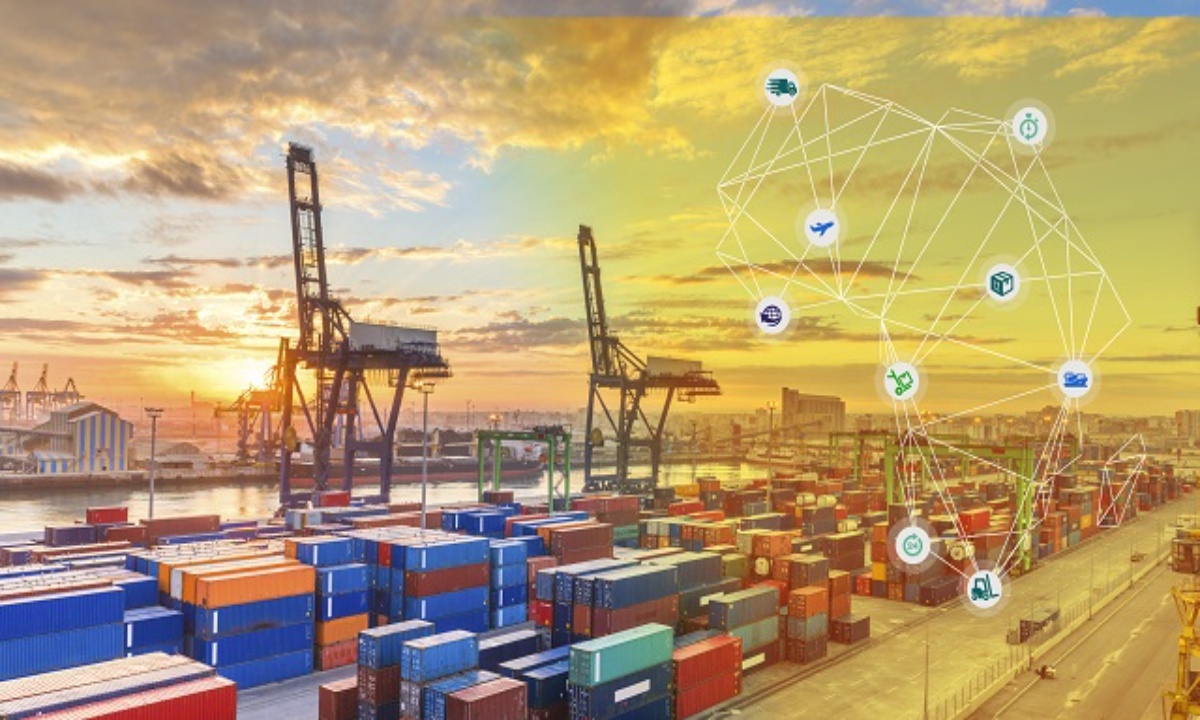
For decades, African countries have exported raw minerals, agricultural products and natural resources, only to import finished goods made from those same materials at significantly higher prices.
Cobalt leaves the Democratic Republic of Congo as ore and returns as part of expensive batteries.
Cocoa leaves Côte d’Ivoire and Ghana as beans and returns as chocolate products worth many times more.
Cotton leaves Africa as raw fibre and returns as clothing produced elsewhere.
The question facing the continent is becoming increasingly urgent:
How long can Africa continue exporting the ingredients of global wealth while importing the finished products of development?
Africa Owns the Resources the World Needs
The global transition toward renewable energy and advanced technology has made Africa’s natural resources more valuable than ever.
According to the United Nations Economic Commission for Africa (UNECA), Africa holds approximately 30% of the world’s mineral reserves, including many critical minerals essential for electric vehicles, renewable energy systems, batteries and digital technologies.
The Democratic Republic of Congo alone produces more than 70% of the world’s cobalt, a mineral used in lithium-ion batteries powering electric vehicles, smartphones and energy storage systems.
Zimbabwe has become one of Africa’s major emerging lithium producers, while Namibia, Mali and Ghana are attracting increasing attention for lithium exploration.
South Africa dominates global platinum-group metal production, while Guinea possesses some of the world’s largest bauxite reserves, a key ingredient in aluminium production.
The irony is clear:
The minerals needed for the world’s green transition are largely found in Africa, but much of the industrial value created from them is captured elsewhere.
The Colonial Pattern Has Not Fully Disappeared
Africa’s dependence on raw material exports has deep historical roots.
During colonial rule, European powers structured many African economies around extracting resources and exporting them overseas.
Infrastructure was often built not to connect African economies with each other, but to transport minerals and agricultural products from mines and plantations to ports.
Although African countries gained political independence decades ago, many economic structures remained largely unchanged.
Today, many countries still depend heavily on exporting commodities whose prices are determined by international markets.
When commodity prices rise, governments benefit.
When prices fall, economies suffer.
This vulnerability has contributed to repeated cycles of debt, currency pressure and economic instability.
The Cost of Exporting Raw Materials
The biggest problem with raw exports is not simply the loss of revenue.
It is the loss of opportunity.
Mining creates jobs, but mineral processing creates far more economic activity.
A country that exports raw lithium earns income from extraction.
A country that processes lithium domestically can create industries around battery production, chemical processing, engineering, research, transportation and manufacturing.
The difference is enormous.
According to the International Energy Agency (IEA), demand for critical minerals will increase significantly as countries transition toward clean energy technologies. However, Africa risks remaining only a supplier of raw materials unless it develops local processing capacity.
The future value of these industries will not be created only in mines.
It will be created in factories.
DR Congo: The World’s Cobalt Supplier With Limited Benefits
Few examples demonstrate Africa’s resource paradox more clearly than the Democratic Republic of Congo.
The country possesses some of the world’s largest deposits of cobalt, copper and other strategic minerals.
Cobalt has become essential to modern technology.
It powers electric vehicle batteries, laptops, mobile phones and renewable energy storage systems.
Yet despite controlling the majority of global cobalt production, DR Congo captures only a limited share of the final value chain.
Most cobalt processing takes place outside Africa, particularly in countries such as China, which dominates global cobalt refining.
President Félix Tshisekedi has repeatedly argued that Congo must receive greater benefits from its mineral wealth and develop local processing industries.
His government has pushed for reforms aimed at increasing local value addition and attracting investments that create more jobs inside the country.
However, critics argue that improving infrastructure, electricity supply, governance and industrial capacity must happen before Africa can successfully compete in mineral processing.
Both arguments are valid.
Africa cannot simply demand factories without building the conditions that make factories possible.
Zambia Wants More Than Copper Exports
Zambia provides another important example.
The country is one of Africa’s largest copper producers, and copper remains central to the global clean energy transition.
Copper is essential for electric vehicles, solar panels, wind turbines and electrical networks.
Yet for decades, Zambia has exported copper mainly in raw or semi-processed forms while much of the higher-value manufacturing happened elsewhere.
President Hakainde Hichilema has repeatedly called for greater investment in mining value chains, arguing that Zambia should not only extract resources but also benefit from processing and manufacturing.
The government has promoted policies aimed at attracting investment in copper processing, battery minerals and industrial development.
The challenge is balancing two realities:
Africa needs foreign investment to develop its mining sector.
But it also needs stronger negotiating power to ensure investment creates local economic value.